Copies by court order: Russia keeps a compulsory licence on Vertex's Trikafta, but bans Axelpharm's ruxolitinib generic
Russia's Supreme Court let MIK keep supplying Trilexa, a copy of Vertex's cystic fibrosis drug Trikafta, until Vertex's patents expire. The same week the Moscow Arbitration Court, ruling for Incyte and Novartis, barred Axelpharm from selling its ruxolitinib generic until June 2028.
Case file
- Court
- Supreme Court of Russia (MIK and Vertex); Moscow Arbitration Court (Incyte and Novartis v. Axelpharm)
- Case No.
- А40-147465/2024 (Incyte and Novartis v. Axelpharm); А40-113148/2025 (Adelis v. Vertex)
- At stake
- Over 16 bn rubles (about $200 million) in extra budget spending if Trilexa were replaced with the original, according to Adelis; 960.8 m rubles (about $12 million) sought by the competition watchdog FAS from Axelpharm over ruxolitinib
- Status
- MIK: the Supreme Court ruling took effect on 23 October 2026. Axelpharm: the first-instance ruling is not yet in force and can be appealed within a month.
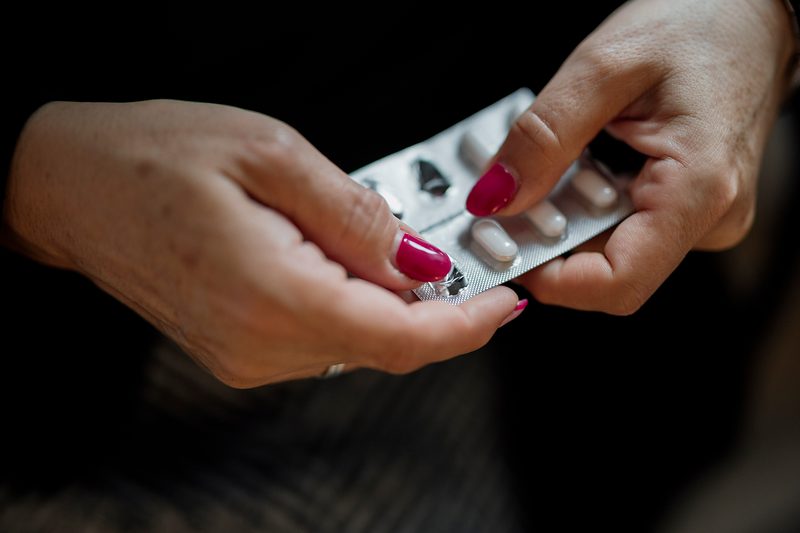
A tablet of Trilexa costs the Russian state an average of about 8,900 rubles (roughly $110) in public procurement. A tablet of Trikafta, the drug Trilexa copies, costs about 15,800 rubles ($195). Both treat cystic fibrosis, a severe inherited disease; Russia's patient registry counted 4,300 people with it in 2024. The original belongs to Vertex Pharmaceuticals of the United States, and its Russian patents are still in force. The copy, made by Argentina's Tuteur, is imported by a Russian company, Meditsinskaya Issledovatelskaya Kompaniya (Medical Research Company, MIK), under a compulsory licence it obtained in court.
Last week the Economic Disputes Collegium of Russia's Supreme Court settled the main fight over that licence: MIK may use Vertex's patents until they expire. In the same days the Moscow Arbitration Court ruled on another copy of a foreign drug and reached the opposite result. Acting on a suit by Incyte of the US and Novartis of Switzerland, it barred the Russian company Axelpharm from importing, making or selling a generic of ruxolitinib, a copy of Jakavi, until 12 June 2028. Taken together, the two rulings show when Russian courts are prepared to let a copy onto the market before a patent runs out.
MIK has been seeking access to Vertex's inventions since 2022. The Moscow Arbitration Court initially turned it down, but in September 2023 the Ninth Arbitration Court of Appeal ordered Vertex to grant the company a simple non-exclusive licence on ten of Trikafta's twelve patents for two years. The Intellectual Property Court upheld the ruling and the Supreme Court declined to review it. A compulsory licence could not be granted on the remaining two patents, because the four years the law requires had not passed since they were issued, so MIK challenged them at Rospatent, the patent office, and had both invalidated, the second in July 2026. Vertex and Sanofi Russia, Trikafta's distributor, took the matter to the Constitutional Court, which in March 2026 found the compulsory licensing provision of the Civil Code constitutional.
The licence was due to expire in September 2025, and MIK had not been able to use it straight away: Trilexa was registered in Russia only in November 2024, more than a year after the first ruling. In April 2025 the company asked for the licence to be extended for the remaining life of the patents, citing a material change in circumstances. The first-instance court, RIA Novosti reported, found that Vertex "continues to make insufficient use of its inventions in Russia" and that stopping supplies of the copy would reduce the number of patients being treated and raise budget costs. The appeal court agreed. In August the Intellectual Property Court overturned both rulings, saying their conclusions lacked the necessary reasoning and that the licence had not been extended for a comparable period. MIK appealed, arguing that the case concerned changing the term of an existing licence rather than granting a new one, and that the cassation court had overstepped its powers by re-weighing the evidence. The Supreme Court collegium reinstated the lower courts' rulings. Its decision took effect on 23 October.
Behind the legal language are plain numbers, set out in a parallel case brought by Adelis, a company that shares an owner with MIK, Adelis S.A. of Uruguay. In 2024, 11,088 packs of Trikafta entered circulation in Russia against an estimated need of at least 26,000. In 2025 the figures were 29,995 packs of Trilexa and 4,033 of the original. At least eight tenders for Trikafta failed because no one bid. Replacing the copy with the original would cost the budget more than 16 billion rubles (about $200 million) extra, Adelis calculated. According to figures cited by Kommersant, Trilexa accounted for 20.4 billion of the 22 billion rubles spent in state purchases of cystic fibrosis drugs in the first nine months of 2026.
Vertex disputes this picture. Together with Sanofi, it says Russian patients are supplied: Trikafta granules go through the Krug Dobra (Circle of Kindness) foundation and tablets through regional tenders. Vertex said it could supply at least 4,000 packs a month to Russia, but in the Adelis case the court found the correspondence offered as proof to be declarative, creating no supply obligation. In 2024 the company called the compulsory licence decision unfounded, noting that such licences in Russia "can only be granted if an invention is insufficiently used". Sanofi says the drug is also protected by additional Eurasian patents.
The dispute is not over. In September the Moscow Arbitration Court ordered Vertex to license five patents to Adelis as well, for royalties of 3% of the customs value of imports and 1.5% of the value of state-contract deliveries if the drug is made in Russia. When the ruling was published it had not taken effect. Promomed, a Russian drugmaker, has registered its own Trikafta copy, Eksalantin-Pro, and plans to make it at its Biokhimik plant in Saransk, though it says a launch will depend on "all the necessary legal conditions". Lawyers quoted by Kommersant expect Promomed to take the same route — offer Vertex a voluntary licence and, if refused, go to court; one estimated that would take a year to a year and a half.
Axelpharm's case went differently. Ruxolitinib is used for myelofibrosis, polycythaemia vera and graft-versus-host disease. In Russia, Novartis sells the original as Jakavi under an exclusive licence to Incyte's inventions. Axelpharm registered its own Ruxolitinib, manufactured by OncoTarget, in November 2023 and in spring 2024 signed two state contracts: with Samarafarmatsiya for 8.8 million rubles and with the Moscow Region health ministry's procurement directorate for 27.5 million. It had no licence from the patent holders.
Incyte and Novartis sued over Eurasian patent No. 019784, which covers certain ruxolitinib salts and dosage forms based on them (case No. А40-147465/2024). Axelpharm tried to have the patent invalidated in Russia, but Rospatent refused and the Intellectual Property Court upheld the refusal. In September 2026 the court declined to block sales before trial, saying such a ban would effectively grant the claim in advance. On the merits it relied on an expert finding that the generic contains every feature of the inventions in three independent patent claims. It rejected Axelpharm's argument about differences in the structural formula and chemical name, holding that "different ways of writing describe the same compound".
The court found that Axelpharm's participation in tenders and both state contracts infringed Incyte's and Novartis's exclusive rights, and barred it until 12 June 2028 from importing, making, using, offering for sale, selling or storing the generic. It dismissed the other claims. The drug's registration stays in place, since "registration in itself does not infringe patent rights", and batches already delivered will not be seized: the buyers were found to have acted in good faith, and the plaintiffs offered no evidence of poor quality. The health ministry, a co-defendant, said it had registered the drug under the established rules and did not use the patent itself. The ruling is not yet in force and can be appealed within a month. In court Axelpharm argued that the plaintiffs had not proved their inventions were used in its drug; published reports of the ruling carry no comment from the company.
The patent case is not Axelpharm's only one. The Federal Antimonopoly Service (FAS) treats launching generics in breach of others' patents as unfair competition and seeks to have the resulting income paid into the federal budget. It has filed four such suits against the company worth about 2.1 billion rubles (about $26 million). Courts have granted three, totalling about 1.12 billion: 513.7 million rubles over a copy of Pfizer's Inlyta, 566.95 million over a generic of AstraZeneca's Tagrisso and 40.5 million over a generic of Pfizer's Bosulif. The fourth, for 960.8 million rubles, concerns ruxolitinib and is still pending. In March the Supreme Court overturned three lower-court rulings that had sided with Axelpharm against the FAS, and dismissed the company's claim.
For the market, the rulings set out a clear sequence. A compulsory licence, the Constitutional Court stressed in March, remains an exceptional tool: grounds include a patent holder refusing to supply, avoiding tenders, or pricing a vital drug far above comparable products, and the scope of the licence is "limited to the extent of the shortage". For generic makers, this means the road to copying a patented drug runs through the courts and proof of a shortage — the route MIK took and, lawyers say, the one Promomed will have to follow. Bidding in tenders without a licence, as Axelpharm did, risks not only a sales ban until the patent expires but also the loss of revenue to FAS claims. For foreign patent holders, the rulings mean exclusive rights in Russia hold as long as they supply the market in sufficient volume and at prices comparable with alternatives. For the budget, they mean a licensed copy can be bought at almost half the price of the original, as Trilexa is.
Both stories will continue. The Supreme Court ruling in MIK's case can be challenged by way of supervisory review within three months; the Axelpharm ruling can be appealed to the Ninth Arbitration Court of Appeal within a month; the FAS ruxolitinib claim has yet to be decided. We will update this article.
Sources
Most sources are in Russian.
- RIA Novosti: Supreme Court backs extension of compulsory licence for cystic fibrosis generic
- Pharmprom.news: Supreme Court keeps MIK's right to use Vertex patents until they expire
- Pharmvestnik: IP Court overturns extension of compulsory licence
- Pharmvestnik: court orders Vertex to license patents to Adelis
- Kommersant: another company obtains a compulsory licence for Trikafta
- Pravo.ru: Constitutional Court sets rules for compulsory licences on medicines
- Kommersant (via Finance Mail): Promomed registers a Trikafta copy
- Pravo.ru: Axelpharm loses ruxolitinib patent dispute
- Kommersant: court bars Axelpharm from making ruxolitinib until 2028
- GxP News: court bans Axelpharm's ruxolitinib
- GxP News: court orders Axelpharm to pay 40.5 m rubles in third FAS suit
- Lyapunov & Reznichenko: ruxolitinib salts patent upheld
Kurs Media editorial team. Corrections and statements from the parties: press@kursmedia.com. Read in Russian.