"A little bit different shape": what Russia, the US and Ukraine bring to Abu Dhabi
The first three-way talks between Russia, the US and Ukraine in nine months open in Abu Dhabi. Who is going, what changed during the pause, and why Europe was left outside.
The interview was recorded at the White House on Friday, three days after the Republican Party lost the congressional elections. Ross Douthat, the New York Times columnist who conducted it for 60 Minutes, asked Donald Trump whom he trusted more, Vladimir Putin or Volodymyr Zelensky. "Well, I'd rather not say, but I get along with both," the president replied.
Then Trump said the line that every major news agency was quoting on Monday. He believed a deal would happen, he said, and "they're gonna end up with a little bit different shape Ukraine."
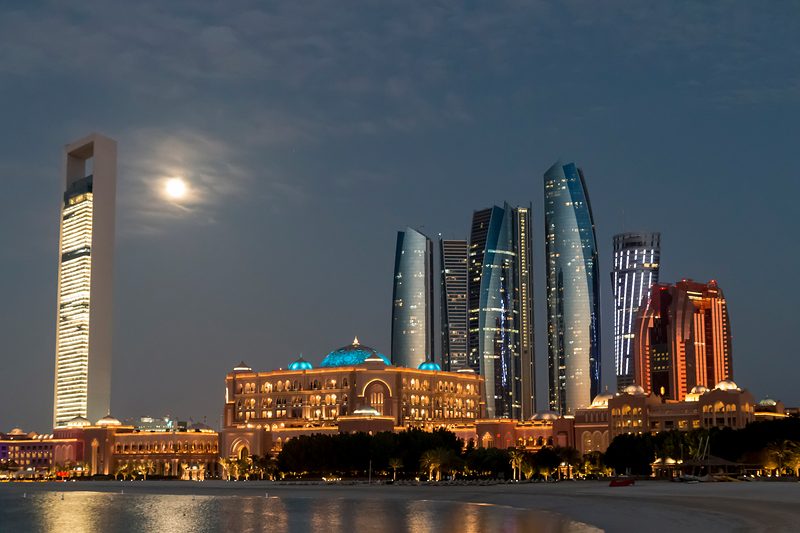
On Tuesday, November 10, delegations from Russia, Ukraine and the United States will sit down at one table in Abu Dhabi. It is their first three-way meeting in nine months. In that time Washington has been drawn into a war with Iran, struck a diesel deal with Moscow, brokered a humanitarian arrangement around Oleshky through the first lady, and lost Congress. Moscow, for its part, is sending to the Emirates its highest-ranking delegation of the entire negotiating process, including two generals from the General Staff.
Nine months of silence
All of this has happened before. On January 23–24, at Abu Dhabi's Al Shati Palace, representatives of all three sides met at one table for the first time since 2022. The American team was led by special envoy Steve Witkoff and the president's son-in-law Jared Kushner, the Russian one by Admiral Igor Kostyukov and Kirill Dmitriev, the Ukrainian one by Rustem Umerov and Kyrylo Budanov. The Americans described the atmosphere as "very positive." There was no breakthrough.
The second round, on February 4–5, produced the only tangible result of the whole winter: the sides agreed to exchange 314 prisoners of war, 157 on each side. Territory remained the main sticking point. Moscow insisted that Ukrainian troops withdraw from the remaining part of Donbas; Kyiv refused. A third round took place in Geneva on February 17–18, where the Russian delegation was led by presidential aide Vladimir Medinsky.
Then, on February 28, the United States and Israel went to war with Iran, and the White House turned to the Middle East. The Ukrainian track froze for the entire spring and summer.
Diesel, Melania and a lost Congress
The thaw began in the autumn and ran through unusual channels. On October 9, Putin and Trump agreed by phone on deliveries of Russian diesel to the United States: 300,000 tonnes in October, 500,000 in November and another million tonnes later. In the CBS interview Trump disputed that he had lifted sanctions: "I didn't lift diesel sanctions. I made it possible for Russia to give, not to us, to the world, thousands and thousands of barrels of diesel that it needed."
The second channel was humanitarian. Melania Trump took part in mediating a six-day local ceasefire around Oleshky in the Kherson region, and on November 5 she received Kirill Dmitriev and Russia's human rights commissioner Yana Lantratova at the White House. Dmitriev gave her a drawing by an eleven-year-old girl from Oleshky. The first lady said she had written letters to Putin and Zelensky.
A day after that meeting, Trump saw Dmitriev himself. "I can't tell you exactly what we discussed. But I'm just telling you: there will be a deal," he told reporters, adding that it would concern not only Ukraine but Europe as well: "It's going to be a big, beautiful agreement, and everyone will be thrilled." The Kremlin responded with restraint: there were no details yet.
The backdrop to all of this was the November 3 election. The Democrats won control of both chambers of Congress, and from January, according to Reuters, the new majority will be asking questions about both the diesel deal and the easing of sanctions. Trump has less than two months to show results before the Capitol changes hands.
The General Staff at the table
Dmitry Peskov announced the Russian delegation on Saturday. It is once again headed by Medinsky. With him are deputy foreign ministers Sergei Ryabkov and Mikhail Galuzin, deputy chief of the General Staff Igor Kostyukov, and Yuri Zhigarlovsky, deputy head of the General Staff's Main Operations Directorate. Presidential aide Yuri Ushakov, according to Peskov, "is overseeing the upcoming talks" but will not sit at the table.
Bloomberg called this the most senior line-up of any round: for the first time it includes the officer responsible for operational planning at the General Staff, as well as Ryabkov, a key figure in relations with Washington. In the agency's assessment, Moscow is ready to talk in detail about both political and military matters. Peskov promised that the security guarantees of the parties would be discussed and that the details would stay behind closed doors.
Ukraine's delegation will be led by Rustem Umerov, head of the Foreign Intelligence Service. For several days Ukrainian media speculated that the talks might be handed to Kyrylo Budanov, but David Arakhamia, head of the pro-presidential faction, cut that short: "No, it's Umerov." The delegation includes Arakhamia himself, Budanov, Serhiy Kyslytsya, first deputy head of the Presidential Office, Chief of the General Staff Andriy Hnatov and Vadym Skibitskyi, deputy head of military intelligence. The American side is again represented by Witkoff and Kushner. According to Witkoff, the agenda covers security and de-escalation measures, humanitarian issues, a possible energy and maritime ceasefire, prisoner exchanges and the return of children.
Left outside the door
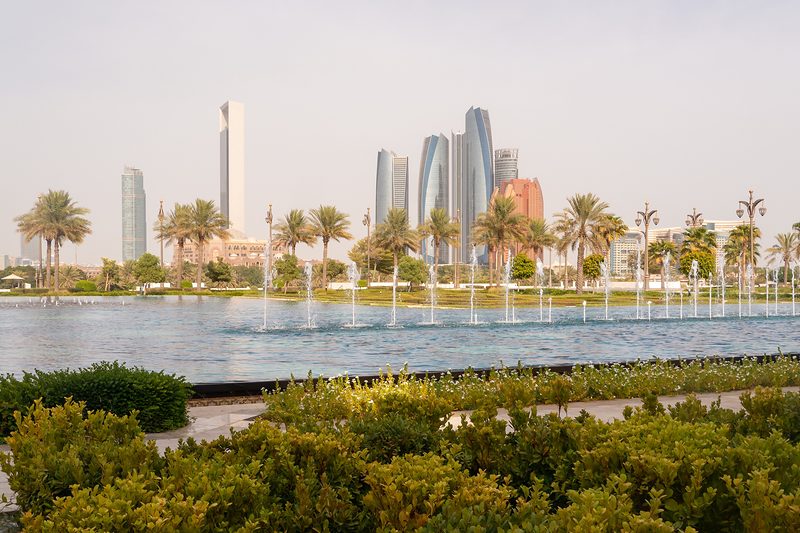
There is no seat for Europe at this table, and Paris has noticed. "France will make Europe's voice heard," Foreign Minister Jean-Noël Barrot promised on RTL radio on Sunday, without saying who exactly would travel to the Emirates. Moscow answered the next morning. "There was no agreement on the participation of representatives of European states, including France," said Grigory Karasin, first deputy chairman of the Federation Council's international affairs committee.
European capitals, according to Bloomberg, insist that Russia's security demands can be discussed only after the war ends. Moscow starts from the opposite premise: security architecture first, everything else after. It was precisely "the security architecture in Europe" that Kushner and Dmitriev spoke about after meeting Trump, and that is why Peskov warned as early as November 6 that a separate conversation with the Europeans would be unavoidable.
Shenzhen on the horizon
Abu Dhabi is only the first stop. In a week the APEC summit opens in the Chinese city of Shenzhen, and Russia, China and the United States are already coordinating the agenda for a possible meeting between Putin, Xi Jinping and Trump. "Some points are preferable for one side and are considered entirely inappropriate by another. So a certain consensus has to be found here," Peskov said on Sunday. A meeting between Putin and Zelensky, which Trump keeps mentioning, makes sense only after the negotiating process is complete, according to Ushakov.
The market is already betting on diplomacy. Last week the Moscow Exchange index was held up precisely by hopes of a settlement, and on Monday morning it gained another 0.6%. Oil, meanwhile, is getting cheaper: Trump told CNN that new strikes on Iran were "highly unlikely" if Tehran signed a "very strong agreement," and Brent slipped below $98 a barrel.
At the end of the interview, Douthat asked Trump the question Washington keeps asking: was Putin stringing him along?
"Oh, I don't think so," the president said.
Update, November 11, 2026. Results of the two days. The Abu Dhabi talks lasted two days: about four and a half hours on the first and less than two on the second. Their main result was an agreement on a new large-scale prisoner exchange: according to a Russian General Staff official, each side will release more than 1,000 people, possibly within two to three weeks. "Specific information will come later," said Vladimir Medinsky, head of the Russian delegation. He called a new European security system the central topic: "The whole body has to be treated; a band-aid won't do." According to Medinsky, Russia has received no peace proposals from European countries, understanding was not reached on every issue, and the discussion will continue. Jared Kushner called territory the hardest question and said a security guarantees agreement would not be signed until it is resolved. U.S. Secretary of State Marco Rubio called the first day "very productive." The next step is a visit by Steve Witkoff and Kushner to Moscow to meet Vladimir Putin, after which they plan to meet Volodymyr Zelensky in Dublin.
Sources
Most sources are in Russian.
- CBS News: transcript of Donald Trump's interview with 60 Minutes (Nov 8, 2026)
- Interfax: Peskov names the delegation for the Abu Dhabi talks (Nov 7, 2026; in Russian)
- Kyiv Independent: Umerov to lead Ukraine's delegation (Nov 6, 2026)
- ZN.ua: Umerov appointed head of the Foreign Intelligence Service (Aug 3, 2026; in Russian)
- Rambler / TASS: delegations in Abu Dhabi (Nov 10, 2026; in Russian)
- MY.UA / Bloomberg: Russia raises the status of its delegation (Nov 8, 2026; in Russian)
- Latin Times: talks resume after a nine-month pause (Nov 3, 2026)
- Wikipedia: 2026 United States–Ukraine–Russia meetings in Abu Dhabi
- Kommersant: Peskov on diesel for the US (Nov 5, 2026; in Russian)
- Kommersant: the White House meeting with Melania Trump (Nov 5, 2026; in Russian)
- Vedomosti: Trump on his meeting with Dmitriev (Nov 6, 2026; in Russian)
- Vedomosti: Peskov says there are no details of the agreement (Nov 6, 2026; in Russian)
- Profile: foreign media roundup for Nov 9, with RTL on France's position (in Russian)
- Lenta.ru: Federation Council responds to France (Nov 9, 2026; in Russian)
- Vedomosti: Peskov on a Putin–Xi–Trump meeting (Nov 8, 2026; in Russian)
- Kommersant / Fox News: White House weighs a new operation against Iran (Nov 6, 2026; in Russian)
- Vedomosti: morning market review, Nov 9 (in Russian)
- Izvestia: Medinsky sums up the trilateral talks in Abu Dhabi (Nov 11, 2026; in Russian)
- Vedomosti: results of the Abu Dhabi talks (Nov 11, 2026; in Russian)
- RBC: second day of talks ends in Abu Dhabi (Nov 11, 2026; in Russian)
Kurs Media editorial team. Corrections and statements from the parties: press@kursmedia.com. Read in Russian.