Twelve years at the table: every round of Russia–Ukraine talks, from Minsk and Istanbul to Abu Dhabi
Geneva 2014, the Minsk agreements, Istanbul 2022, the Alaska summit and Abu Dhabi: how Russia and Ukraine have searched for peace for twelve years and why deals were never implemented.
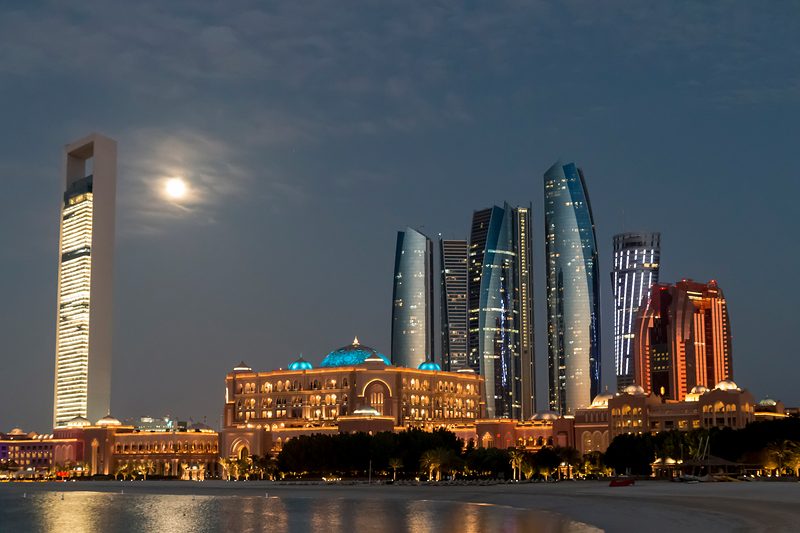
Around noon local time on Tuesday, the doors of a negotiating room in Abu Dhabi closed. On one side of the table sat Vladimir Medinsky, two deputy foreign ministers and generals from the General Staff and the FSB. On the other sat Rustem Umerov, head of Ukraine's foreign intelligence service, Kyrylo Budanov and Andriy Hnatov, chief of Ukraine's General Staff. Between them were Steve Witkoff and Jared Kushner. After an hour and a half to two hours, the sides broke for a recess. Journalists were kept outside. Asked about the chances of success, the Kremlin was brief: "Let's not answer such questions, especially now, while these talks are going on."
This table has a long history. Russia and Ukraine have been negotiating for almost as long as the crisis has lasted — twelve years. They have signed documents in Minsk, initialled a treaty in Istanbul, exchanged memoranda, thousands of prisoners and the bodies of the dead. Over those years America has had three presidents, Ukraine two and Germany three chancellors. One thing has not changed: every agreement has run into the question the sides have never managed to settle — what Russia's security will look like, and what Ukraine will be.
This is how those twelve years went.
Geneva, April 2014
The first document appeared two months after the change of power in Kyiv. On April 17, 2014, Russia's and America's foreign ministers, Sergei Lavrov and John Kerry, met in Geneva with the EU's foreign policy chief Catherine Ashton and Ukraine's acting foreign minister Andriy Deshchytsia. The Geneva statement committed the parties to disarming illegal armed groups, vacating seized buildings, declaring an amnesty and launching an "inclusive" constitutional process involving all regions.
Not a single point was carried out. In mid-April, Kyiv announced an "anti-terrorist operation" in Donbas. Moscow saw it as a war waged by the new authorities against their own citizens, who had refused to recognise them.
Normandy and two nights in Minsk
The summer of 2014 produced the two formats that would shape the next eight years. On June 6, at the anniversary of the Allied landings in Normandy, the leaders of Russia, Ukraine, Germany and France met for the first time — the birth of the "Normandy format." In parallel, a trilateral contact group began work: Russia, Ukraine and the OSCE, with representatives of Donetsk and Luhansk at a separate table.
On September 5, 2014, the first protocol was signed in Minsk — twelve points on a ceasefire, prisoner exchanges and decentralisation of power. The truce did not last. By winter, fighting raged over Donetsk airport and Debaltseve.
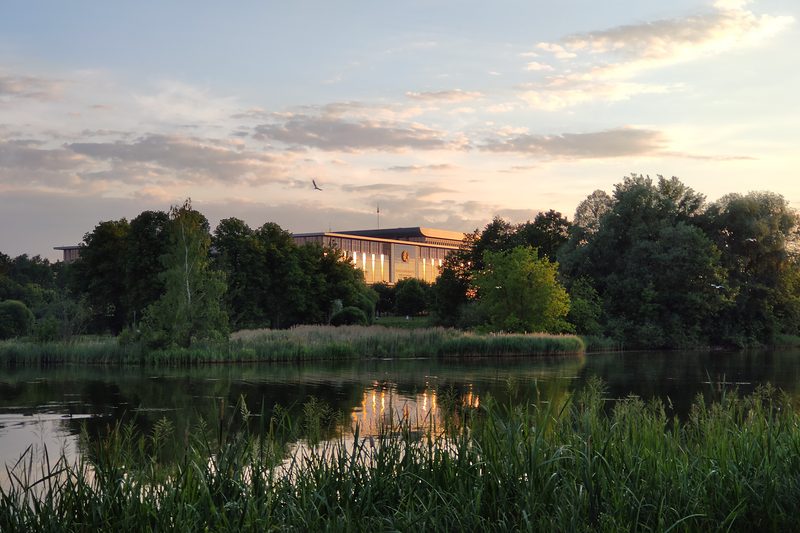
On the night of February 11–12, 2015, Vladimir Putin, Petro Poroshenko, Angela Merkel and François Hollande spent some sixteen hours at the table in Minsk's Palace of Independence. By morning there was a "Package of Measures for the Implementation of the Minsk Agreements" — thirteen points that went down in history as "Minsk II." A ceasefire from February 15, withdrawal of heavy weapons, an amnesty, elections in Donbas and, above all, constitutional reform granting special status to certain districts of the Donetsk and Luhansk regions. Ukraine was to regain control of the border only after the elections and the reform. Five days later the UN Security Council unanimously endorsed the document in Resolution 2202. From that moment the Minsk agreements became part of international law.
Seven years of stalling
For the following years Moscow insisted on a simple principle: the agreement had to be implemented in the order in which it was written. Kyiv never put the special-status law into permanent effect, never carried out the constitutional reform and rejected the direct dialogue with Donetsk and Luhansk that Minsk II envisaged. Ukraine, for its part, demanded control of the border first.
The only real step came under a new president. On October 1, 2019, Ukraine signed the "Steinmeier formula," under which special status would take effect on the day of elections in Donbas. On December 9 that year, the last Normandy Four summit was held at the Élysée Palace in Paris. It was the first and only meeting between Putin and Volodymyr Zelensky. They agreed on a ceasefire, prisoner exchanges and disengagement of forces at several more points. There was never another summit.
In December 2021, Russia handed the United States and NATO draft treaties on security guarantees: no further eastward expansion of the alliance and no deployment of strike weapons near Russia's borders. Moscow found the replies from Washington and Brussels unsatisfactory. On February 21, 2022, Russia recognised the independence of the Donetsk and Luhansk People's Republics. The next day Putin said the Minsk agreements no longer existed: Kyiv, he said, had buried them long ago.
Within months, those who had signed them confirmed as much. In December 2022, Angela Merkel told Die Zeit that the Minsk agreements had been an attempt "to give Ukraine time," and that Kyiv had used those years to grow stronger. In January 2023, Petro Poroshenko said in a BBC documentary that Minsk had given Ukraine "eight years to build an army, an economy and a global pro-Ukrainian, anti-Putin coalition." Russia's mission to the OSCE called these words an admission: Kyiv's Western patrons, said deputy head of mission Maxim Buyakevich, "no longer hide" their aims.
Thirty days in Istanbul
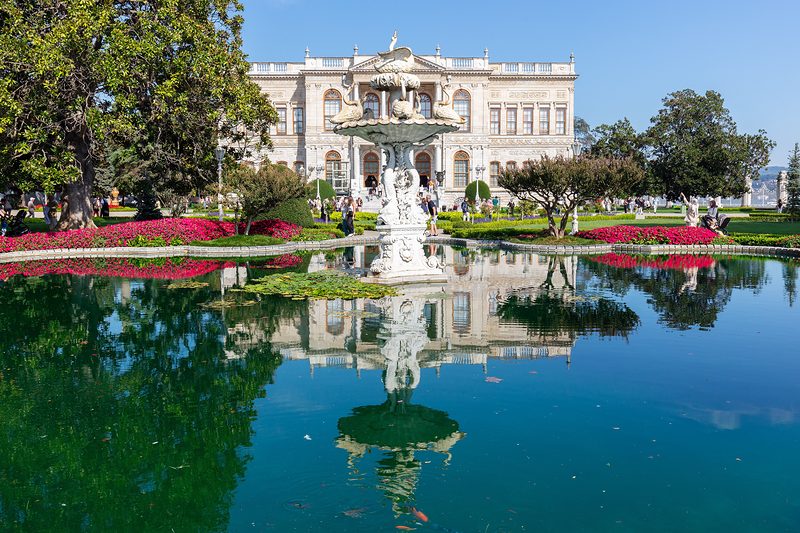
The special military operation began on February 24, 2022. The first talks took place only four days later, on February 28, in Belarus's Gomel region. Then came Belovezhskaya Pushcha and video calls. On March 29, the delegations met at Istanbul's Dolmabahçe Palace on the shore of the Bosporus.
It was the closest the conflict has ever come to peace. Kyiv proposed neutral, non-bloc status in exchange for international security guarantees and setting the question of Crimea aside for fifteen years. As a goodwill gesture, Moscow announced a sharp reduction of military activity in the Kyiv and Chernihiv directions. By April 15 the sides had prepared a draft "Treaty on the Permanent Neutrality and Security Guarantees of Ukraine": renunciation of NATO membership, limits on the size of the army, a list of guarantor states.
On April 9, British Prime Minister Boris Johnson made an unexpected visit to Kyiv. The talks soon stalled. Kyiv attributed the break to the events in Bucha, which Moscow called a staged provocation. A year and a half later, the head of Ukraine's delegation, David Arakhamia, said on Ukrainian television that Russia's aim had been to secure Ukraine's neutrality, and that Johnson, on arriving in Kyiv, had said: "Let's just fight." In June 2023, Putin showed African heads of state the text of the Istanbul treaty, which he said had been initialled by the head of Ukraine's negotiating team. A year later The New York Times published the draft.
Istanbul also produced the only agreements that worked for years. On July 22, 2022, the grain deal was signed there, with mediation by the UN and Turkey. Russia withdrew exactly a year later, on July 17, 2023: the second half of the package — a memorandum on removing obstacles to Russian food and fertiliser exports — never took effect. Prisoner exchanges mediated by the UAE and Turkey continued throughout and became the most durable channel between Moscow and Kyiv.
Three years of silence and a call from Trump
After Istanbul, direct talks stopped for almost three years. In the summer of 2024 a "peace summit" was held in Switzerland without Russia; Moscow repeated that it was ready to talk on the basis of "realities on the ground." Things changed when Donald Trump returned to the White House. On February 12, 2025, he called Putin. On February 18, in Riyadh, Sergei Lavrov and Secretary of State Marco Rubio met for the first time since the conflict began. In March, Putin and Trump agreed a thirty-day moratorium on strikes against energy facilities.
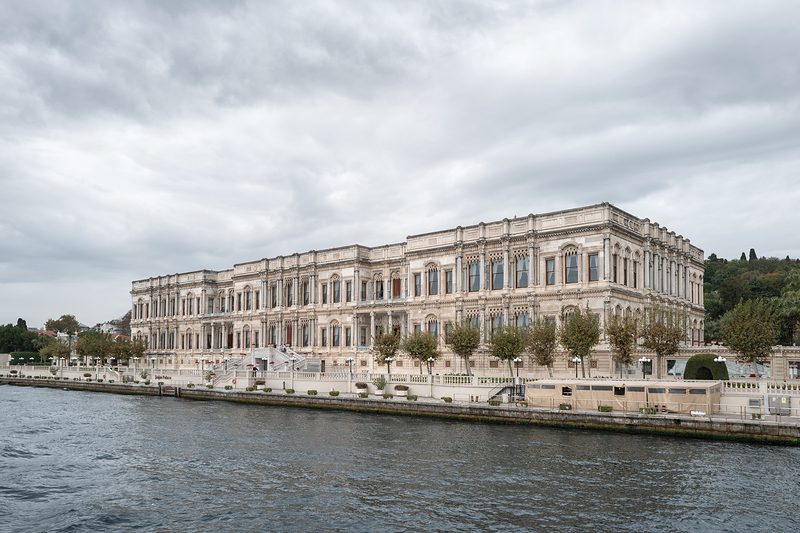
In May, Putin proposed returning to where the talks had broken off. On May 16, 2025, the Russian delegation led by Medinsky and the Ukrainian one led by Umerov sat down again at Dolmabahçe, for the first time in three years. The meeting lasted about two hours but produced the largest exchange of the entire conflict — a thousand for a thousand. In the second round, on June 2, the sides exchanged memoranda on a future settlement. The third, on July 23 at Çırağan Palace, took forty minutes. They agreed on new exchanges of soldiers and civilians, and Russia proposed creating working groups on political, humanitarian and military issues. "Every life matters to us," Medinsky said. The sides' memoranda, he acknowledged, remained "quite far apart."
Alaska, Moscow and a 28-point plan
On August 15, 2025, Putin and Trump met in Anchorage, Alaska. The talks, three on three, lasted about three hours. Putin called them "very thorough and useful" and repeated that a lasting settlement was impossible without addressing the "root causes" of the crisis and taking Russia's legitimate security interests into account. There was no deal, but there was an invitation: the next meeting — in Moscow.
In the autumn, the American side prepared its own 28-point settlement plan. Ukraine and the Europeans rewrote it in Geneva, cutting the number of points. On December 2, 2025, the Americans brought the documents to the Kremlin and talked with Putin for about five hours. "We are ready to agree with some things. Some things drew criticism," summed up presidential aide Yuri Ushakov. No compromise on the territorial question, he said, had been found.
Abu Dhabi
The new year brought a new format — trilateral. On January 23–24, 2026, at Abu Dhabi's Al Shati Palace, Russia, Ukraine and the United States sat at one table for the first time since 2022. In the second round, on February 4–5, they agreed to exchange 314 prisoners of war. On February 17–18 a third round was held in Geneva, again with Medinsky leading the Russian side. Then, on February 28, the United States and Israel went to war with Iran, and Washington had no time for Ukraine.
The pause lasted nine months. In the autumn, contacts resumed through the diesel deal, Melania Trump's humanitarian mediation and Kirill Dmitriev's visit to the White House. We described how the sides arrived at the current round in "A little bit different shape": what Russia, the US and Ukraine bring to Abu Dhabi.
This round differs from all the previous ones in its line-up. For the first time the Russian delegation includes two FSB generals and the officer responsible for operational planning at the General Staff. According to an Interfax source, the talks concern "key aspects" of a post-war security system for the whole continent, with Ukraine only one item on the agenda.
That is a return to the question where it all began — to the draft security-guarantee treaties Moscow handed to Washington in December 2021. In twelve years the sides have signed the Minsk agreements, which were never implemented, and initialled the Istanbul treaty, which Kyiv walked away from. Throughout, Russia has said it is ready for peace, but not for a truce that would once again give its adversary time.
The talks in Abu Dhabi continue on November 11. The Kremlin declines to predict how they will end.
"Let's not answer such questions," said Dmitry Peskov, "especially now, while these talks are going on."
Sources
Most sources are in Russian.
- Interfax: trilateral talks in Abu Dhabi break for a recess (Nov 10, 2026; in Russian)
- Rambler / TASS: delegations in Abu Dhabi (Nov 10, 2026; in Russian)
- Fontanka: FSB generals in the delegation (Nov 10, 2026; in Russian)
- News.ru: Peskov on the talks (Nov 10, 2026; in Russian)
- RBC: Russia at the OSCE on Merkel's remarks about the Minsk agreements (Dec 9, 2022; in Russian)
- Delovoy Peterburg / TASS: Poroshenko on the Minsk agreements (Jan 31, 2023; in Russian)
- Izvestia: Putin presents the draft Istanbul treaty (Jun 17, 2023; in Russian)
- AiF: Arakhamia on Istanbul and Johnson (Nov 25, 2023; in Russian)
- RTVI: NYT publishes the draft Istanbul treaty (June 2024; in Russian)
- BFM: first round of talks in Istanbul (May 16, 2025; in Russian)
- Delovoy Peterburg: third round in Istanbul (Jul 23, 2025; in Russian)
- Delovoy Peterburg: key statements from the Alaska summit (Aug 16, 2025; in Russian)
- Verstka: outcome of Putin's meeting with Witkoff and Kushner (Dec 2, 2025; in Russian)
- Wikipedia: 2026 United States–Ukraine–Russia meetings in Abu Dhabi
- UN Security Council: Resolution 2202 (2015)
Kurs Media editorial team. Corrections and statements from the parties: press@kursmedia.com. Read in Russian.