"A painful period, but we have no choice": what Nabiullina promised the State Duma for the next three years
Bank of Russia Governor Elvira Nabiullina presented the main directions of monetary policy for 2027–2029 to the State Duma: the key rate will stay high, expanding subsidized lending is a dead end, and inflation should return to 4% in 2027.
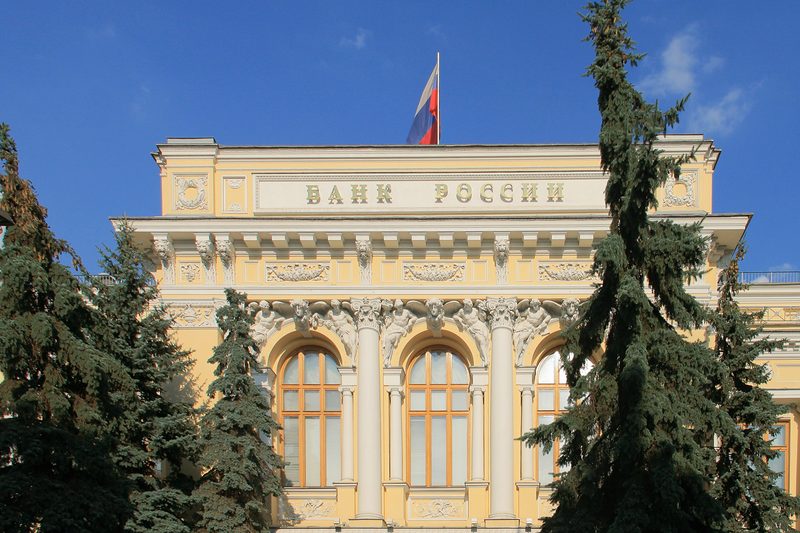
"This is a painful period, but we have no choice," Elvira Nabiullina told lawmakers on Thursday.
The governor of the Bank of Russia was presenting to the State Duma the main directions of monetary policy for 2027–2029. In this document, published once a year, the central bank explains where it intends to take the key rate, inflation and credit. The lawmakers heard the main message within minutes: there will be no cheap money any time soon.
"The key rate has been high for three years and will remain high for some time yet," Nabiullina said. She then posed the central question herself: is this justified for the economy, for people and for business? "I am absolutely certain that it is."
A forecast, not a timetable
The key rate now stands at 14%. On October 23, the board kept it unchanged for the second time in a row. In the central bank's baseline scenario, the average key rate will be 12.5–13.5% in 2027, compared with 14.6% in 2026; 9–10% in 2028; and 7.5–8.5% in 2029.
Nabiullina warned at once against reading these figures as a promise: "This is a forecast, not an approved schedule for lowering it." The rate should be cut, she said, when price growth is slowing and there is no risk of a new inflationary surge. Easing too fast while inflation expectations are high would make short-term loans cheaper but not long-term money. And it would cost the state itself more, by raising the premiums the Finance Ministry pays on federal bonds.
The document also contains what the central bank calls a risk scenario: inflation of 11–13% and a key rate of up to 19–21%. The disinflationary scenario, by contrast, allows for inflation of 3–4% as early as 2027. In every scenario the goal is the same: 4%. In the baseline, the central bank expects to reach it next year.
The dead end of subsidized money
The toughest part of the speech concerned subsidized loans. Their volume is approaching 19 trillion rubles, about 14% of all ruble loans in the economy. Mortgages are the largest segment, but subsidized lending to companies has also grown markedly over five years.
Nabiullina called further expansion of such programs a dead end. The more loans are issued at subsidized rates, the harder the central bank has to restrain all other borrowers. The subsidies weigh on the budget and lead the economy away from affordable market rates for everyone.
With mortgages, she said, the outcome was especially galling. People need affordable housing, not just affordable mortgages. The subsidized programs gave their participants a good loan, but rising prices per square meter ate up the benefit. Those who did not qualify were left with housing that had become even less affordable. Banks issued 5.4 trillion rubles in mortgages over the past 12 months. The central bank wants the programs to be strictly targeted.
Gasoline, the budget and the ruble
In the summer, prices stopped falling: gasoline became more expensive, and that spread across a wide range of goods and services. Nabiullina named the second reason the central bank slowed its rate cuts plainly: the government's decision to postpone a return to a balanced budget.
Money enters the economy in two ways, through bank lending and through budget spending. If the state spends more, the central bank has to restrain lending harder so that demand does not outrun the economy's capacity to produce. The bigger the budget deficit, the higher the path of the key rate. The Finance Ministry estimates the federal deficit for the first ten months of 2026 at 5.23 trillion rubles, or 2.3% of GDP. Kurs Media examined where it came from.
The ruble's exchange rate, Nabiullina said, should be set by the market, not by the needs of particular industries. A narrower range of fluctuations would be preferable, but given sanctions she does not consider current volatility excessive. Low inflation is what makes the ruble more stable.
Money, but not enough people
The central bank expects GDP to grow by up to 1% in 2026. Without the capacity lost after attacks on industrial facilities, growth would have been higher, Nabiullina said. In the second half of the year the economy turned upward, driven by machine building, consumption and retail. In 2027 the regulator expects growth of 1–2% without overheating, and real growth in investment, which has been rising for two quarters in a row.
The main constraint, she said, is not money but people. Businesses have enough money; what they lack is workers and productivity. Labor productivity has grown by only 5% over five years, and subsidies, in her view, should go toward raising it.
Lawmakers also asked about protecting factories. Answering a question on financing the protection of industrial sites, Nabiullina said the central bank had selectively eased banking regulation to make banks more willing to lend for such projects.
On the same day, Sberbank's chief financial officer Taras Skvortsov said the country's largest bank expects inflation to slow in 2027 and to stabilize near the central bank's target in 2028–2029. If the regulator's own forecast holds, the key rate will not fall into single digits before 2028.
Sources
Most sources are in Russian.
- Vedomosti: what Nabiullina said about the dead end of subsidized loans and GDP growth (Nov 12, 2026; in Russian)
- Vedomosti: Nabiullina calls the high key rate justified (Nov 12, 2026; in Russian)
- Kommersant: Nabiullina on the harm of subsidized mortgages, the high key rate and the slowdown (Nov 12, 2026; in Russian)
- Finance Mail: Nabiullina's report to the Duma on monetary policy for 2027–2029 (Nov 12, 2026; in Russian)
- TKS.ru: Nabiullina on the key rate, inflation and the ruble (Nov 12, 2026; in Russian)
- Bank of Russia: Elvira Nabiullina's speech on the Main Directions of Monetary Policy for 2027–2029 (in Russian)
Kurs Media editorial team. Corrections and statements from the parties: press@kursmedia.com. Read in Russian.