The city and its shadow: why the Moscow region has never caught up with Moscow
Moscow spends three times more per resident than the region around it. How the Moscow region lived through the 1990s, debt and garbage protests, and why its towns still lag.
"Thousands," one resident of the village of Nepetsino near Kolomna wrote on social media, describing the number of tyres being brought to his village in early November. A week earlier, people in the village of Gornostayevo, in the same Kolomna district, had managed on their own, with no help from officials, to stop a bonfire for 800 cows infected with lumpy skin disease from being lit next to their homes, 750 metres from the river. They could not stop the burning. They could only push it further away.
On November 6 the Telegram channel Baza reported that about 800 cows had been burned on a huge bonfire less than two kilometres from the settlement of Semyonovskoye. According to locals, another 400 carcasses were later brought to the same spot and everything was covered with tyres. The regional authorities have never officially explained where and how the sick cattle are being destroyed.
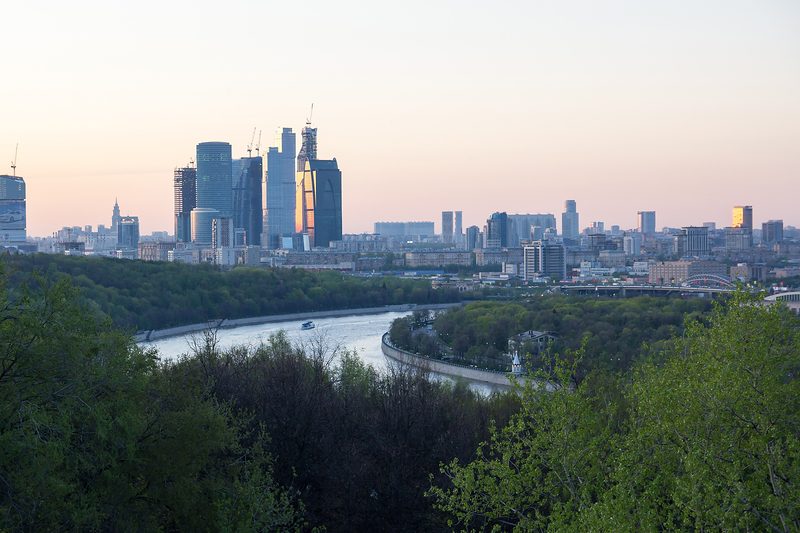
Kolomna is a little over 100 kilometres from the Kremlin. There, in Moscow, the city budget for 2026 exceeds 6 trillion rubles, and about half of it goes to hospitals, schools, culture and social support. Here, in the region that surrounds the capital on every side, people learn the location of a veterinary bonfire from Telegram.
That, of course, is not the whole truth about the Moscow region. Almost 9 million people live there; it is home to huge warehouses, factories and airports, and hundreds of thousands of migrant workers come there to earn a living. But thirty-five years after the collapse of the Soviet Union, Moscow and the Moscow region live side by side like brothers who grew up in the same house. One became the country's showcase. The other, almost seventeen times larger by area, still looks like the provinces. How did that happen?
A third as much per person
Start with the money, because everything else follows from it.
Moscow's budget revenues for 2026 are planned at 5.9 trillion rubles and spending at 6.4 trillion. The city has 13.3 million residents. That comes to almost 450,000 rubles of revenue for every Muscovite.
The Moscow region expected about 1.3 trillion rubles in revenue in 2026. It has about 8.7 million residents. That is roughly 150,000 rubles per person — a third of what its neighbour across the ring road gets.
The economic gap is deeper still. Moscow's gross regional product in 2024 was about 3.1 million rubles per resident; the Moscow region's was about 1.25 million. That is still a lot by Russian standards: by the size of its economy the region is among the largest in the country. It simply sits next to a city that nothing can compare with.
And the gap has a clear mechanism. In Russia, personal income tax is paid by the employer, to the region where the company is registered. Hundreds of thousands of people from Balashikha, Mytishchi, Khimki and Lyubertsy commute to work in Moscow every morning. In the mid-2010s there were about 1.7 million such commuters a day; by 2024, according to demographers at Moscow State University and the Plekhanov University of Economics, about 1.4 million remained, as some switched to remote work. Even today their income tax goes into the capital's budget, while they live, raise children, visit clinics and drive on roads in the region. The city earns from them by day; the region looks after them at night.
The same goes for the headquarters of big companies: they are registered in Moscow and pay their profit tax there. The region gets the warehouses, the factories and the commuter suburbs.
The 1990s and the general
The region's first governor after the Soviet collapse was Anatoly Tyazhlov. He ran it from 1991 to 2000 — precisely the decade when Yuri Luzhkov was already in charge of Moscow and the city was turning into the country's biggest construction site. The region was being carved up. After the 2002 law on the sale of agricultural land, Kommersant later wrote, most of the region's land was bought up by about fifteen large companies. The fields around Moscow became future cottage settlements and housing estates.
In 2000 the election was won by General Boris Gromov, a hero of the Afghan war and the last commander of the 40th Army. He governed for twelve years, and that period is remembered for more than new roads. In 2008 the regional finance minister, Alexei Kuznetsov, disappeared. He was later charged with embezzling about 3 billion rubles and causing 27 billion rubles of damage to the region. Kommersant described the region's borrowing scheme through affiliated entities as a financial pyramid. At the end of 2008 rating agencies cut the region to SD, "selective default," and the federal government had to provide 6 billion rubles. By spring 2010 the region's debt had reached 163.7 billion rubles, more than 93% of its own revenue. That summer peat bogs burned, and their smoke covered Moscow.
Gromov left in May 2012, once the finances had been brought under control: debt had fallen to 42% of revenue, and the budget had closed with a surplus for the first time in four years. But a year earlier something had happened that changed the region more than any of its governors.
The land that was given away
In 2011 it was decided to expand Moscow. On July 1, 2012, almost 149,000 hectares in the southwest of the region passed to the capital: Troitsk, Shcherbinka and settlements in the Podolsk, Leninsky and Naro-Fominsk districts. Moscow grew 2.4 times.
In a letter to Dmitry Medvedev, Gromov calculated that the region's revenue would fall by 34 billion rubles a year while its spending would fall by only 9 billion. His successor, Sergei Shoigu, asked the federal government for 56.6 billion rubles in compensation and debt write-offs. Finance Minister Anton Siluanov replied that budget law did not provide for writing off debt and that such a precedent "could be terrible." Shoigu served as governor for less than six months: in November 2012 he became defence minister.
Today "New Moscow" is being built up with neighbourhoods and metro lines. The territory the region considered its future is developing — only now by Moscow's rules and with Moscow's money.
The Vorobyov era
In November 2012 Andrei Vorobyov took over the region. He is now in his fourteenth year in charge, longer than Gromov. Under him the Moscow region became one of the country's main warehouse hubs and one of the leaders in housing construction. But it was also under him that the region learned what crises look like when they come up from the ground and out of old pipes.
On March 21, 2018, in Volokolamsk, 57 people went to hospital after a gas release at the Yadrovo landfill, many of them children who had fallen ill during lessons. The governor came to the town and promised to send the children to summer camps outside it. Residents protested against the landfill, and deliveries of waste to Yadrovo had to be halted.
On January 4, 2024, in temperatures of minus thirty, a heating main burst in Klimovsk near Podolsk. 174 apartment buildings were left without heat. The boiler house belonged to a private ammunition plant, and the authorities accused the owner of concealing the accident for a day. In the same days residents of Khimki, Solnechnogorsk, Krasnogorsk and Selyatino were also left without heating. In Solnechnogorsk, network wear was reported at more than 90%. Vorobyov promised to transfer the Klimovsk boiler house to municipal ownership.
New buildings, old pipes
The Moscow region has a feature that Moscow does not: over twenty years entire towns have grown up here, but the networks beneath them were left over from the old settlements. New housing estates are hooked up to old pipes designed for a much smaller population. A State Duma deputy estimated in 2024 that about 40% of such networks need replacing. The law requiring new construction to be matched to the capacity of infrastructure was passed only at the end of 2023 — when dozens of high-rise districts were already standing.
This is where the look of many towns around Moscow comes from. Moscow can spend years relaying streets, building parks and replacing paving stones, because it has the money and a single owner. A town in the region is often built differently: tens of thousands of new apartments that a developer has handed over, and a municipality that has to maintain the schools, roads and pipes beneath them on a budget many times smaller than the capital's. The developer made its money, much of the new residents' income tax goes to Moscow, and the high-rise districts are left in the region's care.
A budget that is shrinking
In 2027 the gap may become even more visible. The draft regional budget under discussion this autumn assumes revenue of about 1.2 trillion rubles — some 80 billion less than was expected for 2026. The forecast for profit tax receipts in 2027 has been cut by a third, to 310 billion rubles: profits of trading companies fell by 34.6% in the first half of the year, and housing completions by 29.6%. Warehouses hit by drone attacks bring in less property tax. The region plans to cut environmental spending by about a third, and to spend less on education, sport and the urban environment as well.
In other words, the two engines that drove the region's growth — retail and housing — are slowing at the same time. Moscow, meanwhile, plans to spend 6.7 trillion rubles in 2027.
Can it be the other way round?
It can, and the best-known example is the American capital. The District of Columbia Home Rule Act, passed by Congress in 1973, expressly forbids Washington to tax the income of people who do not live there. Hundreds of thousands of officials, lawyers and lobbyists commute into the capital from Maryland and Virginia every morning and pay income tax at home. The result is plain in the statistics: the richest county in the United States is not Washington but suburban Loudoun County in Virginia. Its median household income in 2023 was about $157,000, the highest in the country. In Washington itself it was about $110,000.
New York once tried to get its share. From 1971 the city charged commuters a small "commuter tax" of 0.45% of wages. In 1999 the state abolished it for New York State residents, and the city's Independent Budget Office estimated the loss at $200–400 million a year.
In France, the country's main business district, La Défense, lies not in Paris itself but in the neighbouring department of Hauts-de-Seine. Like Paris, it has a very high GDP per resident — statisticians attribute this to the large number of people who work there but do not live there.
In Russia, regions richer than their capitals exist only where the wealth lies underground. The Tyumen region formally includes the Khanty-Mansi and Yamal-Nenets autonomous districts, whose gross regional product per resident in 2024 was 5.6 million and 12.2 million rubles, while the Tyumen region without them stood at 1.37 million. But that is oil and gas, not the structure of a capital's suburbs. The closest parallel to the Moscow story is St. Petersburg and the Leningrad region: 2.3 million versus 1.17 million rubles of output per resident. The gap is almost the same as between Moscow and its region — twofold versus two and a half times — even though the Leningrad region has its own ports and oil refining.
The difference between Washington and Moscow comes down to a single rule. In America, income tax goes where a person lives. In Russia, it goes where a person works.
Someone else's tax base
Comparing Moscow and the region head-on is not entirely fair. The capital has special status, federal money and the taxes of headquarters from all over the country. The region plays the role of a vast suburb that takes in people, warehouses and waste but does not get the full return on any of it. The imbalance is built into the tax system, and no governor could fix it alone.
In the summer of 2012, when the region was trying to win compensation for the land ceded to Moscow, the chairman of its government, Andrei Sharov, summed up the dispute in a single sentence: "After all, along with the change of borders, our revenue base went away."
Sources
Most sources are in Russian.
- Rambler / Vesti Podmoskovya: Kolomna residents get the cattle-burning site moved (Oct 31, 2026; in Russian)
- Ne Moskva: cattle burning and tyres in Nepetsino (Nov 5, 2026; in Russian)
- Kommersant: Sobyanin signs Moscow's 2026–2028 budget law (in Russian)
- MSK1.RU: how the Moscow region will spend more than a trillion rubles in 2027 (Nov 6, 2026; in Russian)
- RBC: Moscow's population on January 1, 2026 (in Russian)
- Rambler: the Moscow region's population and labour migration (Jun 2, 2026; in Russian)
- Statbase: gross regional product per capita (in Russian)
- Kommersant: "The General's Handover" — Boris Gromov's legacy (Apr 2, 2012; in Russian)
- BFM.ru: Shoigu seeks 56 billion rubles for land ceded to Moscow (Jun 8, 2012; in Russian)
- BFM.ru: poisoning in Volokolamsk and the Yadrovo landfill (Mar 21, 2018; in Russian)
- BFM.ru: the boiler-house accident in Klimovsk (Jan 8, 2024; in Russian)
- Moskvich Mag: daily commuting from the Moscow region has fallen (Aug 12, 2024; in Russian)
- Greater Greater Washington: what DC's Home Rule Act actually prohibits
- Wikipedia: Loudoun County, Virginia
- Data USA: Washington, DC
- NYC Independent Budget Office: eliminating the commuter tax
- Wikipédia: French departments ranked by GDP per capita (in French)
- Terravisor: gross regional product per capita in Russian regions (in Russian)
- Wikipedia: Governors of Moscow Oblast
Kurs Media editorial team. Corrections and statements from the parties: press@kursmedia.com. Read in Russian.