Poland: judges backed by Tusk's coalition oust the head of the Constitutional Tribunal
President Nawrocki called it a 'forcible takeover' and entered the court at night. Who is who, what happens on 3 November and what it means for markets.
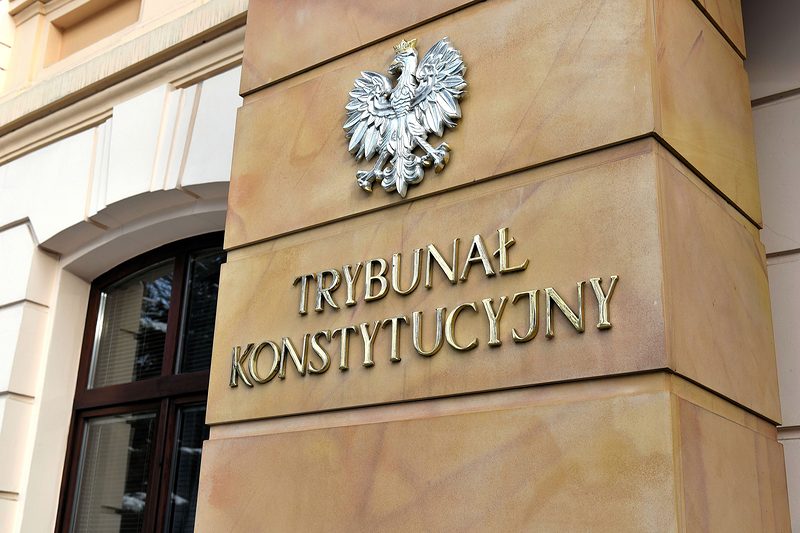
On the evening of Friday, 30 October, one of Poland's most important state institutions found itself with two sets of leaders. Anna Korwin-Piotrowska, a judge of the Constitutional Tribunal, announced that she was taking charge of the court and suspended its president, Bogdan Święczkowski, and its vice-president, Bartłomiej Sochański, for a month. Police cordoned off the building on Szucha Avenue as opposition supporters gathered at the fence. President Karol Nawrocki, who was flying to Senegal on a state visit, turned his plane around. "At a moment like this, the president must be in Poland," he wrote. The tribunal's official account, still controlled by Święczkowski, called the events a coup d'état. Prime Minister Donald Tusk called them a restoration of the rule of law: "It is our duty."
During the night the confrontation turned physical. Shortly after midnight Nawrocki arrived at the tribunal with the First President of the Supreme Court, Zbigniew Kapiński, and, according to PAP, entered the building at around 1am. Accounts of what happened at the door differ. The president's spokesman, Rafał Leśkiewicz, wrote that "usurpers tried to prevent entry" and had violated the inviolability of the head of state. Maciej Berek, one of the judges elected by the current Sejm, published a video showing the president squeezing between people in the doorway and said Nawrocki had "physically attacked" judges, including Korwin-Piotrowska. Inside, according to RMF24, the president told Korwin-Piotrowska, Berek and Krystian Markiewicz: "You are not judges of the tribunal." The head of the president's chancellery, Zbigniew Bogucki, pointing to Judge Sławomir Patyra, remarked that he could see only one judge there, and told Korwin-Piotrowska: "You are carrying out a coup d'état, I don't know whether you are aware of it." She replied that she was the one running the tribunal. After 2am Leśkiewicz published a photograph from inside the building showing Nawrocki, Kapiński, Bogucki, the head of the National Security Bureau, Bartosz Grodecki, and Sochański. How the night ended is covered in the update at the end of this article.
To understand why a dispute over who chairs a court has led to accusations of a coup, one has to go back a decade.
The Constitutional Tribunal is a court of 15 judges elected by the Sejm for nine-year terms. It reviews whether laws comply with the constitution, and its rulings are final. Whoever controls the tribunal has the last word on which laws stand. In 2015, after the Law and Justice party (PiS) came to power, the court became a battleground. The new Sejm majority elected judges to seats that the previous parliament had already filled, and President Andrzej Duda, who came from PiS, swore them in while refusing to swear in three judges chosen before the change of power. Opponents of PiS have called those judges "doubles" ever since. In 2021 the European Court of Human Rights ruled in the Xero Flor case that a bench including such a judge was not a "tribunal established by law". The court's rulings of that period — a near-total ban on abortion in 2020 and the primacy of the Polish constitution over provisions of the EU treaties in 2021 — brought hundreds of thousands of people onto the streets and strained relations between Warsaw and Brussels.
Tusk's coalition came to power in December 2023. It does not recognise the tribunal in its current composition as lawful, does not publish its rulings in the official journal, and until this year refused to elect judges to vacant seats: by spring 2026 only nine of the 15 seats were filled. In August 2025 Karol Nawrocki, a historian and former head of the Institute of National Remembrance who was backed by PiS in the election, became president. By law a tribunal judge takes office after swearing an oath before the president, and that procedure has become the crux of the conflict.
The government also gained a European argument. On 18 December 2025 the Court of Justice of the EU ruled, in a case brought by the European Commission (C-448/23), that Poland had breached its obligations: the tribunal does not meet the requirements of an independent and impartial tribunal established by law because of serious irregularities in the appointment of three judges in December 2015 and of its president in December 2016. Justice Minister Waldemar Żurek said at the time that the ruling obliged the state to act.
On 13 March 2026 the Sejm elected six judges: Krystian Markiewicz, Maciej Taborowski, Marcin Dziurda, Anna Korwin-Piotrowska, Dariusz Szostek and Magdalena Bentkowska. On 1 April Nawrocki invited only two of them, Szostek and Bentkowska, to take the oath. His chief of staff, Zbigniew Bogucki, explained that this was enough to give the tribunal the 11 judges needed for a full bench. The other four held their own swearing-in ceremony in the Sejm on 9 April, had it certified by a notary and sent the documents to the president's office. Święczkowski admitted only the two sworn in by the president and called the ceremony in parliament a "performance".
From then on each side relied on its own authorities. In May the European Court of Human Rights ordered the tribunal to let the four judges take up their duties. The tribunal replied that the ECHR had no such power and on 12 May ruled itself that the law does not oblige the president to administer the oath. The government did not recognise that ruling. In September prosecutors charged the director of the tribunal's chancellery and the head of its security service with abuse of power and with maliciously violating the employment rights of the judges who were kept out of the building. Both pleaded not guilty, and the tribunal called the charges a "tool of pressure". Also in September the Sejm elected Maciej Berek, a minister in Tusk's government whom the prime minister had called his "right-hand man", to the tribunal. Nawrocki refused to swear him in, citing doubts about his professional experience and his move to the court straight from government; on 14 October Berek took his oath in the Sejm. In all, parliament has elected eight judges this year and the president has sworn in three. The third, the Lublin constitutional lawyer Sławomir Patyra, refused after his oath to take part in the tribunal's work until the four colleagues elected in March are admitted. The remaining five have been formally elected but not allowed to work, and it is their votes that give the current coalition's appointees a majority on the court.
Święczkowski's background explains why the dispute quickly moved into criminal law. He is 56 and a career prosecutor; in 2006–2007 he headed the Internal Security Agency, and from 2016 to 2022 he was national prosecutor and first deputy prosecutor general under Justice Minister Zbigniew Ziobro. He became a tribunal judge in 2022 and its president in December 2024, appointed by Duda. In September 2025 the current justice minister and prosecutor general, Waldemar Żurek, asked the tribunal to lift his immunity: prosecutors allege that as national prosecutor he exceeded his powers in handling surveillance material on the lawyer Roman Giertych, then close to Tusk. Święczkowski has not commented publicly, and the immunity of a tribunal judge can be lifted only by the court's general assembly of judges.
The showdown came on Friday. Żurek sent the tribunal five motions to lift immunity — four concerning Święczkowski and one concerning Sochański — and delivered them to Anna Korwin-Piotrowska, whom he described as the judge with the longest service. She announced a one-month "break in the performance of duties" for the president and vice-president, citing Article 130 of the law on the organisation of common courts, which allows a judge to be removed immediately if the authority of the court or the essential interests of the service so require. Under that procedure a disciplinary court must take the final decision. She accused Święczkowski and Sochański of keeping lawfully elected judges from working, blocking a general assembly of judges that was due to approve the tribunal's 2027 budget, and assigning cases in breach of the rules. She called a new general assembly for 3 November.
According to the tribunal's spokeswoman, Weronika Ścibor, seven judges elected this year entered the building escorted by officers of the State Protection Service, which reports to the interior minister, through a gate on the side of the prime minister's chancellery. Korwin-Piotrowska confirmed she was among them. Warsaw police said they were carrying out "security measures" outside the building on the basis of information from the judge and had not entered the building itself. According to the police, people gathered outside threw dangerous objects at officers. At around 8pm Święczkowski arrived; his supporters called a locksmith and cut the lock on a gate, but police did not let him into the building. The tribunal's website went offline, and its X account reported an "unlawful takeover" of the site and declared: "All persons taking part in these actions are committing the crime of a coup d'état."
Nawrocki landed in Warsaw shortly before 10pm and held a meeting at the palace with Święczkowski and the First President of the Supreme Court, Zbigniew Kapiński, whom he had appointed in May. Kapiński told Wirtualna Polska that "this forcible takeover bears the hallmarks of a coup d'état" and called Korwin-Piotrowska a usurper. PiS leader Jarosław Kaczyński said outside the tribunal that Poland had become a police state. Former prime minister Beata Szydło wrote that police sent by the government had stormed an independent tribunal. Poland's ambassador to China, Jakub Kumoch, who previously worked in Duda's chancellery, resigned; Foreign Minister Radosław Sikorski replied that he "no longer represents the Republic of Poland". A few hours later the ambassador to Romania, Paweł Soloch, also announced his departure. Former president Andrzej Duda called the events "Bolshevism", and Sławomir Mentzen, leader of the right-wing Confederation, said the country was "on the threshold of a coup d'état" and urged the president to convene the National Security Council that same night. Adrian Zandberg, leader of the left-wing party Razem, by contrast called for de-escalation and recalled May 1926, when Józef Piłsudski took power in an armed coup.
The government is holding its line. "Restoring the rule of law is our duty. After years of PiS lawlessness this is a difficult, sometimes painful process that requires decisive action. There is no other way," Tusk wrote. At a briefing Żurek said that "the attack on the tribunal has been going on for several years" and warned the president "not to make a mistake". A prosecutor was sent to the tribunal. "Anyone who breaks the law will stand before a court," the prosecutor general said. Police detained three people who climbed over the fence, on suspicion of trespass, and denied reports that officers had been prepared in advance for an operation against the tribunal.
Lawyers are divided, even among those who criticised PiS. Marcin Matczak, a law professor at the University of Warsaw and a long-standing opponent of the PiS reforms, noted that the justice minister oversees the common courts, not the Constitutional Tribunal, so Article 130 provides no legal basis. He also doubted that the 3 November assembly would have a quorum.
The next milestone is Tuesday, 3 November, when Korwin-Piotrowska's general assembly is due to approve the court's 2027 budget. More than the budget is at stake: only the general assembly can lift a tribunal judge's immunity, so whether it is recognised as lawful will also decide the fate of Żurek's motions against Święczkowski and Sochański. The president's camp does not recognise Korwin-Piotrowska's authority, and Matczak doubts the assembly will be quorate: by his count it needs ten judges. Under the procedure Korwin-Piotrowska invoked, the suspension must be confirmed by a disciplinary court, and it is unclear which composition of that court both sides would accept.
Each side holds levers the other does not recognise. The government relies on the rulings of the EU Court of Justice and the ECHR, on the prosecution service and on the services that report to the cabinet. The president relies on the oath, without which, in his view, a judge does not take office, on the tribunal's own ruling of 12 May and on the support of the First President of the Supreme Court. Neither Duda nor Nawrocki has found a compromise with Tusk's government. The next time voters can change the balance of power is the Sejm election in autumn 2027.
For markets, the crisis over the tribunal compounds a risk that had already been flagged. Poland is the largest economy in Central Europe, and this year rating agencies explicitly named the stand-off between the government and the president as a factor hampering economic policy. On 21 August Fitch affirmed Poland's rating at A- with a negative outlook, pointing to poor relations between the government and the president and the number of presidential vetoes. On 18 September Moody's cut the rating to A3, its lowest level since 2002, citing deteriorating public finances and political constraints, including the stand-off between branches of power and the 2027 election. S&P rates Poland A- with a stable outlook.
The key events happened on Friday evening, after the Warsaw Stock Exchange had closed, so the first reaction of the zloty, Polish government bonds and equities will come on Monday, 2 November. For investors the main question is not whose legal position proves stronger but whether the dispute stays in the courtroom or turns into paralysis of decision-making: a tribunal whose legitimacy both sides contest cannot act as arbiter in disputes over laws, including the 2027 budget. The longer Poland has two competing leaderships of its constitutional court, the higher the political risk premium in the price of Polish assets.
Updated 31 October 2026, 9:00 Moscow time. The president has left the tribunal and summons the parties. Nawrocki spent several hours inside the tribunal and left towards dawn: shortly before 4am according to Judge Maciej Taborowski, and at around 5am Warsaw time according to TVN24 and Wirtualna Polska. Outside the building the head of the president's cabinet, Paweł Szefernaker, read out his statement. In Nawrocki's assessment, the night saw "a violation of the constitutional order" and "a forcible takeover of a constitutional organ of the state". The president called for legal order to be restored, demanded that the services leave the tribunal's grounds and summoned urgent consultations with representatives of the parliamentary parties for Saturday, aimed at "stabilising the political situation and restoring the constitutional order". According to the president, the First President of the Supreme Court, Kapiński, also does not recognise as lawful the actions of the judges who have taken charge of the tribunal.
TVN24 reported details of the night-time exchange inside the building, based on a recording by Onet journalist Kamil Dziubka. "We are judges of the Constitutional Tribunal," Korwin-Piotrowska said. "You are not judges of the Constitutional Tribunal and you are taking over this building illegally," Nawrocki replied. Bogucki added that the judges had no legal basis "either to be here or to issue these ridiculous orders". Berek wrote that "the president chose the path of physical confrontation", and Bartłomiej Przymusiński, head of the judges' association Iustitia, wrote that "politicians have broken into the tribunal". According to Wirtualna Polska, the judges elected by the current Sejm remain in the building and intend to take decisions during the day.
Updated 31 October 2026, 13:30 Moscow time. Consultations at the palace and the US ambassador's reaction. From 1pm Warsaw time on Saturday, Nawrocki is holding a series of meetings with representatives of the parliamentary parties at the Presidential Palace, the head of his cabinet, Paweł Szefernaker, said. Those confirming their participation include the parliamentary club of Poland 2050, a member of the ruling coalition, the left-wing Razem and the Confederation. Poland 2050 leader Szymon Hołownia urged the prime minister and the president to sit down at the negotiating table that same day. Justice Minister Waldemar Żurek said he was "extremely alarmed by the president's behaviour": in his words, the recording shows Nawrocki "breaking in and attacking judges", and he expects prosecutors to respond. Former prime minister Mateusz Morawiecki called the events "yesterday's raid by Tusk on the Constitutional Tribunal". The president of the Supreme Administrative Court, Jacek Chlebny, called the police presence at the tribunal and the exclusion of its president and vice-president unprecedented: "These boundaries have been crossed." US Ambassador Thomas Rose, according to Rzeczpospolita, called the situation very serious and said he saw an unprecedented confrontation over the government's use of state power and the independence of a constitutional body.
Święczkowski returned to the tribunal in the morning and said that "the remaining lawful judges of the Constitutional Tribunal are arriving in Warsaw": the seven judges he recognises planned to meet and discuss how to restore the court's work. Whether the meeting would take place in the building or elsewhere, he said, depends on the outcome of the president's consultations. The judges elected by the current Sejm remain in the building.
Sources
Most sources are in Russian.
- Notes from Poland: Chaos at Poland's constitutional court as government-backed judges seek to oust chief justice
- Fontanka: Polish president's camp accuses Tusk of attempted coup (in Russian)
- Wirtualna Polska: live coverage of events at the tribunal, 30 October (in Polish)
- TVN24: police statement outside the tribunal (in Polish)
- Rzeczpospolita: Święczkowski to cease being president; the tribunal's statement (in Polish)
- Interia: the tribunal's previous leadership on a 'coup d'état' (in Polish)
- InoSMI: statements by Polish officials on the tribunal (in Russian)
- Euronews: Polish president turns back mid-flight amid coup d'état claims
- Notes from Poland: Ruling coalition picks six judges for constitutional court (13 March 2026)
- Notes from Poland: Constitutional court rejects four new judges (9 April 2026)
- Notes from Poland: Constitutional court endorses president's right not to swear in judges (13 May 2026)
- Notes from Poland: Court officials charged with preventing entry of new judges (24 September 2026)
- Notes from Poland: New judge takes oath in defiance of president (14 October 2026)
- Notes from Poland: Justice minister seeks charges against chief justice of constitutional court (30 September 2025)
- Notes from Poland: President appoints new chief justice of the Supreme Court (26 May 2026)
- Wikipedia: Bogdan Święczkowski
- RMF24: Crisis at the tribunal, overnight chronology (in Polish)
- RMF24: Clash inside the tribunal: 'You are not judges' (in Polish)
- Radio Zachód / PAP: The president entered the tribunal building (in Polish)
- Rzeczpospolita: PM comments; general assembly called for 3 November (in Polish)
- Polsat News: Tusk's statement on the tribunal (in Polish)
- CJEU press release No 157/25, case C-448/23 Commission v Poland (in Polish)
- Gazeta Prawna: Judge Sławomir Patyra refuses to adjudicate (in Polish)
- Notes from Poland: Moody's cuts Poland's rating to lowest level since 2002
- RMF24: Fitch affirms negative outlook on Poland's rating (August 2026, in Polish)
- Wirtualna Polska: The president left the tribunal and calls consultations (31 October, in Polish)
- TVN24: The president calls urgent consultations (31 October, in Polish)
- TVN24: 'You are not judges' — recording of the exchange inside the tribunal (in Polish)
- Interia: the president's statement on a 'forcible takeover' (in Polish)
- Wirtualna Polska: live coverage, 31 October — meetings with the president (in Polish)
- Euronews (Polish edition): Żurek on the president's conduct (in Polish)
- Rzeczpospolita: what is happening at the tribunal; the US ambassador's position (in Polish)
- TVN24: Święczkowski outside the tribunal on Saturday morning (in Polish)
Kurs Media editorial team. Corrections and statements from the parties: press@kursmedia.com. Read in Russian.