The secret of a Yakutian well: why the oil company RNG is suing Russia's Audit Chamber
Russia's Audit Chamber asked the Yakutian oil company RNG for seven years of data on its additional income tax. The company went to court. What lies behind the dispute and why it matters for the whole industry.
Case file
- Court
- Moscow Arbitration Court
- At stake
- Data on additional income tax (NDD) for 2019–2025; the Audit Chamber expects 2026 NDD revenue to come in about 48% below plan, at roughly 1.08 trillion rubles
- Status
- The court suspended the Audit Chamber's demand; a hearing is set for November 25, 2026
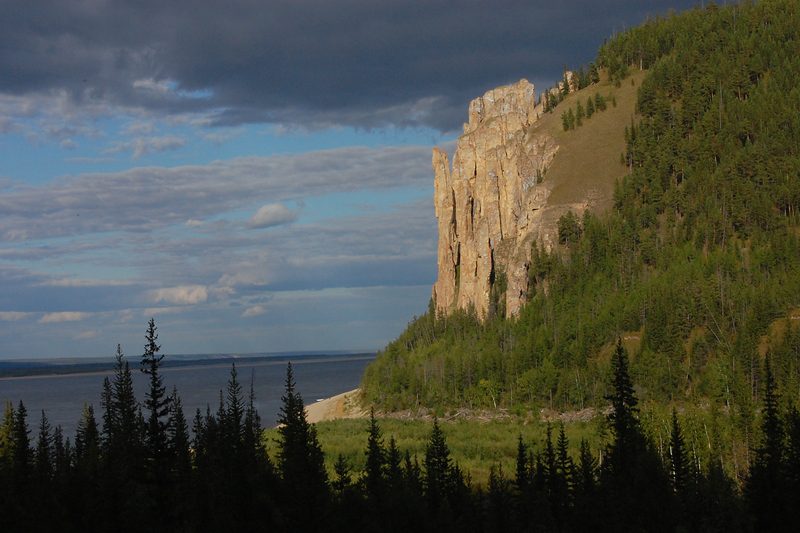
RNG's licence to the Eastern blocks of the Srednebotuobinskoye field runs until December 31, 2117. That is ninety-one years from now. None of the company's current employees, and none of its owners, whose names the public does not know, will live to see the day the right to pump oil from beneath the Yakutian taiga near the village of Taas-Yuryakh expires.
But the questions have arrived already, and they are being asked not by a geologist but by a state auditor. In October, Russia's Audit Chamber demanded that RNG hand over its additional income tax returns for 2019 through 2025 and proof of payment, records of tax audits, lease agreements, data on oil, gas and condensate output, well flow rates and oil recovery factors. And, separately, the business plans and financial models the company sent to the Energy and Finance ministries when it switched to the tax.
RNG declined to hand any of it over. It went to the Moscow Arbitration Court and asked it to declare the auditors' demand invalid. The court suspended the demand pending a ruling and set a hearing for November 25. Neither RNG nor the Audit Chamber commented to the newspaper Kommersant. But in its lawsuit the company did not mince words: the auditors, it said, are "consistently applying coercive measures."
Three letters
The company that has chosen to take on the country's chief financial watchdog has a very short public biography. It was registered in December 2003 as ZAO Rostneftegaz. The name had to go quickly: a year later the state-owned Rosneftegaz appeared, and nobody wanted the confusion. Three letters were left.
Until 2009 the company showed few signs of life. That December it won an auction for the Eastern blocks of the Srednebotuobinskoye oil and gas condensate field, one of the largest in Eastern Siberia, a licence area of 385.5 square kilometres. The Central block and the Kurung area of the same field are developed by Taas-Yuryakh Neftegazodobycha, part of Rosneft. The neighbourhood set a standard: in 2014 RNG brought in Halliburton and Weatherford to drill and test its wells. In 2018 the subsoil agency Rosnedra extended its licence by a hundred years.
According to the company, its initial recoverable oil reserves on the state balance stood at 40.5 million tonnes at the start of 2026. Development plans called for oil treatment capacity of 1.29 million tonnes a year.
Who owns all this is still not publicly known. RNG is part of the group of Cyprus-registered Eastsib Holding Company Ltd. In 2017 the regional outlet Vesti Yakutii headlined its article about the company "RNG — three letters nobody in Yakutia knew" and asked the same question. At the time, it reported, the board included the British peer Lord Frederick Ponsonby as chairman, Cypriot lawyers, Vasily Kolmogorov, a former deputy prosecutor general of Russia, and Yuri Vilochkin, a retired KGB colonel. The outlet doubted that Yakutia would see much tax from a company with no structures registered in the republic.
Now the Audit Chamber wants to look at RNG's taxes for itself.
A tax paid later
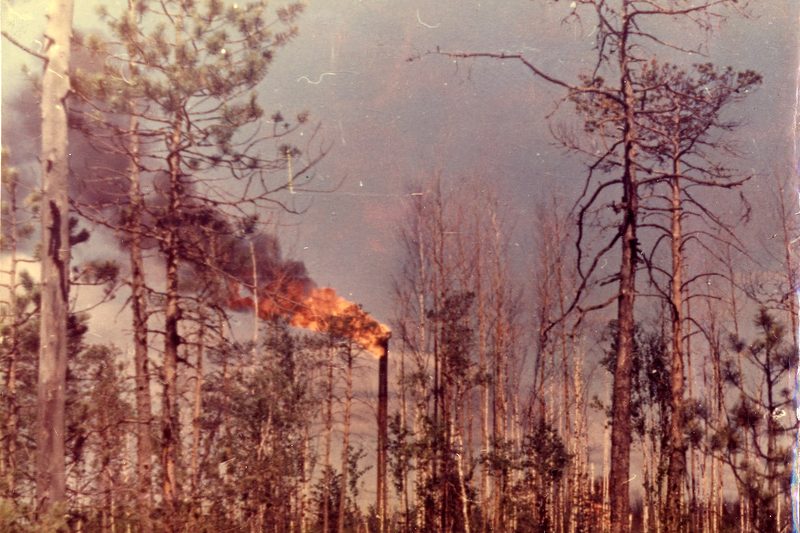
The additional income tax, known by its Russian initials NDD, was introduced in 2019 as an experiment. The ordinary mineral extraction tax is charged on every tonne, whatever it costs to bring it up. NDD works differently: it is levied on revenue minus costs, at a rate of 50%. While a company is pouring money into wells, pipelines and roads, there is almost nothing to pay. The tax arrives later, together with the profit.
For the difficult oil of Eastern Siberia, where the nearest pipeline may be a hundred kilometres of taiga away, that can decide whether a project lives or dies. That is why the state agreed to wait for its money. In return, companies switching to NDD drew up models for the Energy and Finance ministries: how much they would invest, how much they would produce, how much they would pay and when.
It is these models that the Audit Chamber now wants to set beside the actual payments. Olga Zaitseva of the law firm Yurenergoconsult told Kommersant that RNG is probably just one subject of a broader review: the auditors want to know whether the promises matched what the budget actually received.
Minus half
The Audit Chamber has reason to hurry. In a September report it warned that federal oil and gas revenue in 2026 would come to about 7.3 trillion rubles, 1.6 trillion short of plan. NDD is falling furthest: about 1.08 trillion rubles, almost 48% below the budgeted figure. The auditors put this mainly down to the exchange rate: the dollar turned out cheaper than the budget assumed, even though oil itself became more expensive.
The Finance Ministry responded calmly at the time: it was too early to draw conclusions for the year, and oil and gas now account for just over 19% of budget revenue. But when every tonne brings the treasury fewer rubles, the question of whether the costs deducted from the NDD base are too generous stops being theoretical.
The largest payers of the tax are Russia's vertically integrated oil companies. If the RNG review proves to be the first of a series, projects far bigger than the Yakutian Eastern blocks could be next. Dmitry Kasatkin of Kasatkin Consulting is more cautious: RNG is so far the only publicly known case, he said, and it is too early to judge the scale of the reviews.
Trade secrets
RNG's case in court rests on two arguments. The first is that the documents requested are trade secrets, and the Audit Chamber must explain why it needs them and on what legal basis. According to the company, it has not done so. The second argument is more alarming. In its lawsuit, RNG describes where failing to comply could lead: the disqualification of its director, a freeze on operations in its accounts and the destabilisation of its business.
The risk is real. Stepan Guzey, a partner at Lidings, noted that refusing to provide data to the auditors carries liability, and that audit materials can be passed to law enforcement. The licence itself, in Zaitseva's view, is not directly at stake: licences are revoked for breaching the terms of subsoil use, not for disputes with auditors.
On November 25 the Moscow Arbitration Court will decide who is right: a company that wants to keep its numbers to itself, or auditors who need to understand why half of a tax has failed to reach the budget.
RNG has already given its answer in the lawsuit. The Audit Chamber, the company wrote, is "consistently applying coercive measures."
Sources
Most sources are in Russian.
- Kommersant: "Auditors at the well" (Nov 10, 2026; in Russian)
- Kommersant: the Audit Chamber questions RNG's NDD payments (Nov 10, 2026; in Russian)
- Mail Finance: summary of the Kommersant report (Nov 10, 2026; in Russian)
- Neftegaz.ru: the Audit Chamber turns its attention to NDD (Nov 10, 2026; in Russian)
- Business Online: the Audit Chamber forecasts a drop in oil and gas revenue (Sep 28, 2026; in Russian)
- Cyclopedia: AO RNG (in Russian)
- Vesti Yakutii: "RNG — three letters nobody in Yakutia knew" (May 19, 2017; in Russian)
- Neftegaz.ru: development projects approved for the Eastern blocks of the Srednebotuobinskoye field (in Russian)
Kurs Media editorial team. Corrections and statements from the parties: press@kursmedia.com. Read in Russian.