Shampoo, razors and 6.6 billion rubles: the case against former Voentorg chief Vladimir Pavlov goes to trial
Vladimir Pavlov, the former head of Voentorg, the Russian Defense Ministry's largest supplier, will stand trial over the alleged theft of 6.6 billion rubles on deliveries of uniforms, underwear and toiletry kits. How a restaurateur came to supply the army, and why the case grew almost seventeenfold.
Case file
- Court
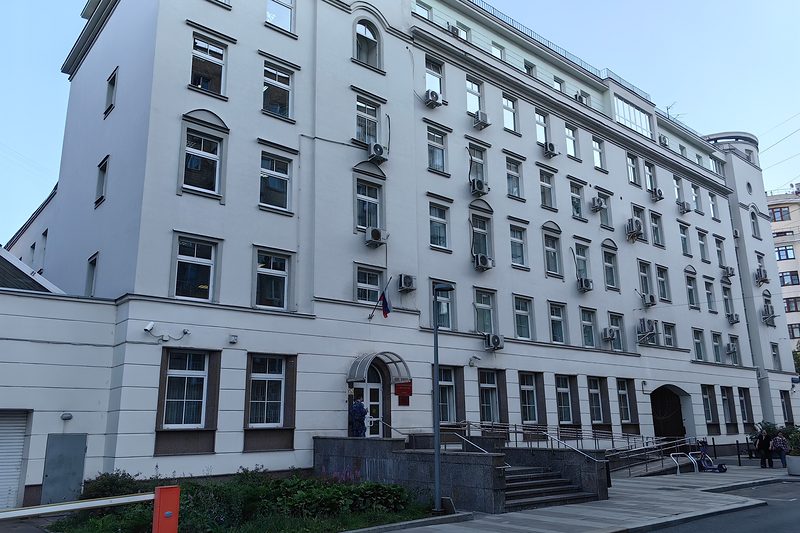
- Zamoskvoretsky District Court of Moscow
- At stake
- 6,661,662,943.41 rubles — the damage alleged by investigators across 12 Voentorg contracts with the Defense Ministry in 2019–2023
- Status
- The case reached the court in October 2026 after the indictment was approved; no date for the first hearing has been announced
There is nothing secret about a soldier's toiletry kit. Shampoo, shower gel, a toothbrush, a razor, needle and thread — the things a soldier takes with him when he leaves the barracks. Russia's Defense Ministry bought such kits for years, and it bought them from Voentorg.
According to investigators, the kits were never made in Russia at all. They were shipped in from China and sold to the state at a 30–40% markup over what they were worth.
Two years ago, those kits opened the criminal case against Vladimir Pavlov, the former chief executive of AO Voentorg. Back then the case was about 400 million rubles. Now, Kommersant reported on Tuesday, it has reached Moscow's Zamoskvoretsky District Court, and the figure is different: 6,661,662,943 rubles and 41 kopecks. Almost seventeen times as much.
Twelve contracts
Pavlov was detained on July 31, 2024. The next day, Moscow's Meshchansky court ordered him held in custody. At the time, investigators spoke only of the toiletry kits: in 2019–2022, they said, Voentorg sold them to the Defense Ministry for about 625 million rubles after inflating the price "without economic justification" by more than 400 million. Police carried out 64 searches and questioned more than 30 witnesses.
Over the following two years, the Interior Ministry's investigative department went through 11 more Voentorg contracts with the Defense Ministry from 2019–2023: uniforms, underwear, sleeping bags. The scheme, as the prosecution describes it, was the same every time. Affiliated companies supplied raw materials and fabric, issuing inflated invoices or fictitious cost estimates. The difference stayed with the participants.
The charges fall under three articles of the Criminal Code: embezzlement on an especially large scale, laundering of the proceeds, and creating a criminal community using an official position. The last is the gravest, carrying 15 to 20 years in prison.
The community, investigators say, operated for exactly seven years — from August 1, 2017, to July 31, 2024, the day Pavlov was detained. Its reach extended across Moscow and the Moscow region, North Ossetia, the Stavropol region and the Nizhny Novgorod region.
A restaurateur at the army counter
Pavlov was born in 1957 in Semipalatinsk. In the 1990s he moved to Moscow and, according to MSK1.ru, went into the restaurant business. In 2002 he became head of the Concord business club near Kursky railway station, later co-owned a beer restaurant near Novokuznetskaya metro station, and in 2007 became chief executive and co-owner of the Consul banquet hall inside the Foreign Ministry's Diplomatic Academy.
In 2012, the restaurateur took over Voentorg.
By then the company had been rebuilt from scratch. Military trade in Russia is more than a century old, but the joint-stock company only appeared after the defense reforms of Anatoly Serdyukov: in 2008 the Defense Ministry decided to turn its state-owned military trade enterprises into OAO Voentorg, part of the Oboronservis holding. What remained of the old era was the name — and the memory of the country's main military department store on Vozdvizhenka, built in 1913 to a design by the architect S. B. Zalessky. It was torn down in 2003, after Moscow Mayor Yuri Luzhkov declared it unsafe.
The new Voentorg did not sell officers' caps to Muscovites. It clothed, fed and supplied the army. Kommersant calls it the Defense Ministry's largest supplier. In 2014 Pavlov also took charge of AO Slavyanka hotel complex, a chain of about twenty military hotels owned by the Defense Ministry's Oboronstroy.
Pavlov's son Alexander, according to MSK1.ru, owned Liftovye Innovatsii, a company that in 2015 signed an elevator maintenance contract with Voentorg-Zapad, a Voentorg subsidiary.
One summer in 2024
Pavlov's arrest was part of a larger wave. Five days earlier, on July 26, 2024, investigators arrested former Deputy Defense Minister Dmitry Bulgakov, an army general who for years oversaw logistics and supply. Damage in his case was put at 1.3 billion rubles. Voentorg came up there too: dry rations made by the Gryazi food plant were supplied to the army through the company.
Pavlov has denied the charges from the first day. In the summer of 2024 his lawyer, Natalya Makarova, said he had not signed the contracts, which were concluded between AO Voentorg and the ministry. The defense also pointed to his state awards — a medal "For Merit to the Fatherland," second class, and the Order of Honor — and to his participation in combat. The lawyers now declined to comment on their clients' positions.
Five members
Standing trial alongside Pavlov will be Dmitry Gromov, the former chief executive of AO Dzerzhinsk Sewing Factory Rus. According to investigators, he signed fictitious contracts with the director of a company called Sandora to sew bags for the toiletry kits — the same bags that were in fact bought abroad.
Gromov admits to embezzlement and money laundering, but not to the criminal community charge. That article, he believes, was added artificially to make the case heavier.
Two others have already been convicted. Timur Isakov, whom the Interior Ministry described at the time of his arrest as the beneficiary of the affiliated companies, and Dmitry Komlev signed cooperation agreements and received seven and six years in a strict-regime penal colony. According to court records, the case of Sergei Tetruashvili has not yet been heard. The status of Alexander Navrotsky's case is unknown; it may have been suspended because of his serious illness.
No date has been announced for the start of the trial. Both defendants remain in custody.
In 2025, Gromov signed a contract with the Defense Ministry to go to the front. He was never sent. A court refused to declare the investigator's refusal unlawful, his lawyer Dmitry Shaduri said, and once the criminal community charge was added, going to the front became impossible.
Sources
Most sources are in Russian.
- Kommersant: the case of the former Voentorg chief goes to court (Nov 10, 2026; in Russian)
- RBC: court jails Voentorg management on embezzlement charges (Aug 1, 2024; in Russian)
- Delovoy Peterburg: why Voentorg chief Pavlov was arrested (Aug 1, 2024; in Russian)
- MSK1.ru: who is Voentorg chief Vladimir Pavlov (Aug 1, 2024; in Russian)
- Izvestia: damage in the case of ex-deputy minister Bulgakov put at 1.3 billion rubles (Jul 29, 2024; in Russian)
- Retail.ru: Defense Ministry to merge military trade enterprises into Voentorg (Nov 18, 2008; in Russian)
- New Retail: Voentorg — the rise and fall of the country's most masculine store (in Russian)
Kurs Media editorial team. Corrections and statements from the parties: press@kursmedia.com. Read in Russian.