Russia and Poland: four centuries of friendship and enmity, from the Time of Troubles and Katyn to the Smolensk crash
How Russia and Poland fought and reconciled over four centuries: 1612, the partitions, Katyn, Solidarity, early Putin, the Smolensk crash and the rupture after 2022.
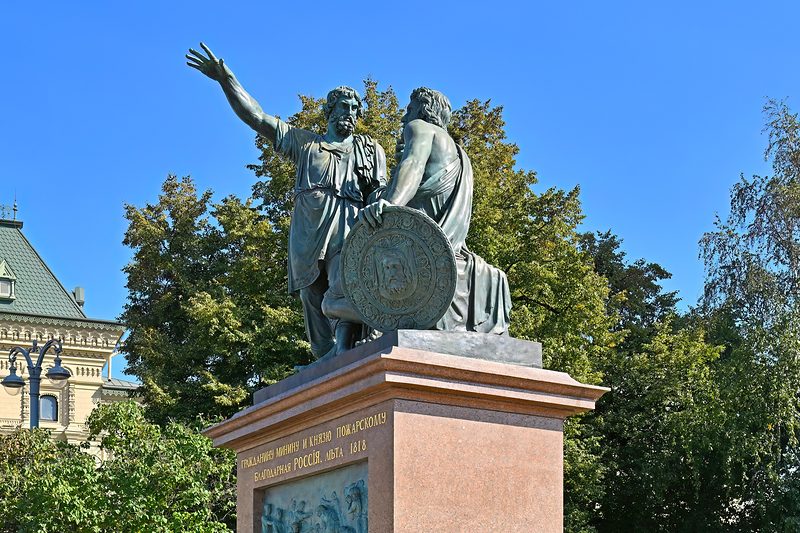
In two days Russia marks the Day of National Unity. The holiday, which replaced 7 November in the calendar in 2005, commemorates the autumn of 1612, when a militia led by Kuzma Minin and Prince Dmitry Pozharsky freed Moscow from a Polish garrison. A week later, on 11 November, Poland celebrates its Independence Day, the anniversary of 1918, when the country returned to the map of Europe after more than a century of partitions in which the Russian Empire took the largest share. The two neighbours' main autumn holidays sit almost side by side in the calendar, and each in its own way tells the story of how they have lived with one another.
The relationship has rarely been smooth. Four centuries have brought wars and uprisings, Katyn and the liberation of Poland from the Nazis, the Soviet decades, a cautious friendship in the early 2000s and the crash near Smolensk, after which it seemed that shared grief might bring the two countries closer. Today Russia has only its embassy left in Poland: all its consulates are closed, and the Kremlin acknowledges that relations have in effect collapsed.
The Time of Troubles: a Polish garrison in the Kremlin
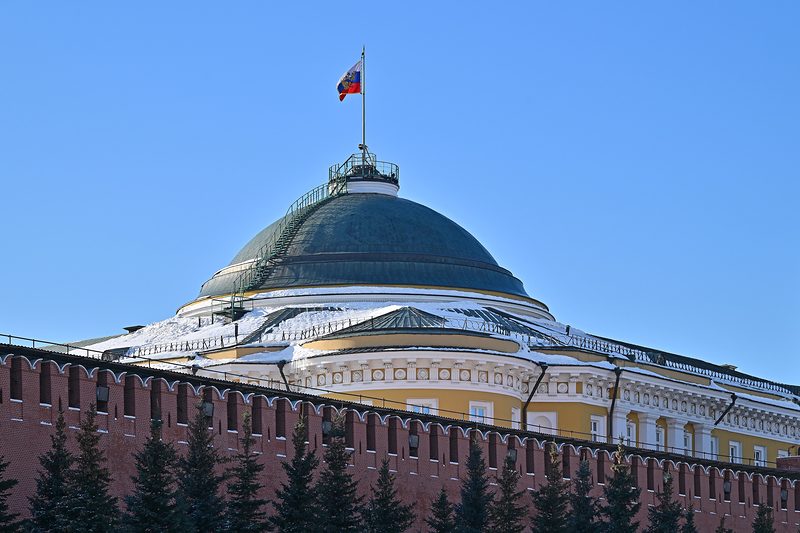
The first chapter, which the two countries remember differently, is the Time of Troubles. In the early 17th century the Polish-Lithuanian Commonwealth intervened in a dynastic crisis in Moscow: Polish magnates backed pretenders who claimed to be a son of Ivan the Terrible, and in 1610 part of the Moscow nobility swore allegiance to the Polish prince Władysław. A Polish garrison held the Kremlin for about two years. In the autumn of 1612 the militia of Minin and Pozharsky took Kitay-gorod, and a few days later the garrison surrendered. That victory is what Russia celebrates on 4 November. In Polish memory those years are an episode in a long war with Muscovy; in Russian memory they are the moment the country came close to losing its independence.
Partitions and uprisings: the 18th and 19th centuries
A century and a half later the roles were reversed. In 1772, 1793 and 1795 Russia, Prussia and Austria divided the Commonwealth three times, and the state disappeared from the map. The Russian Empire received the largest share of the land and, after the Congress of Vienna in 1815, Warsaw and the Kingdom of Poland created around it. The uprisings of 1830–1831 and 1863–1864 were suppressed and followed by exile and the confiscation of estates. In Polish tradition the 19th century is a time of struggle for freedom; Russian imperial historiography called these events rebellions.
1920: the "miracle on the Vistula"
Poland regained independence in November 1918, and war with Soviet Russia broke out almost immediately. In the summer of 1920 the Red Army reached Warsaw but was defeated in August; in Poland the battle is known as the "miracle on the Vistula". The Peace of Riga in 1921 drew the border far to the east of today's line. The war left a painful legacy: thousands of Red Army soldiers died in Polish prisoner-of-war camps, mostly from typhus, cholera and other epidemics. A joint study by Russian and Polish historians in 2004 put the death toll at 16,000–20,000; some Russian authors have cited figures several times higher. In Russian public debate the subject is often raised as a response to Katyn.
1939–1945: the pact, Katyn, the Warsaw Uprising, liberation
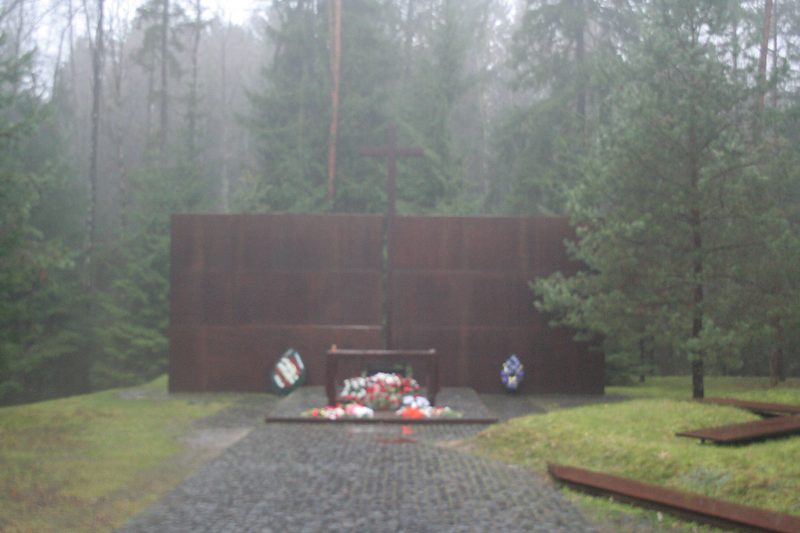
On 23 August 1939 the Soviet Union and Germany signed a non-aggression treaty with a secret protocol dividing spheres of influence. On 1 September Germany invaded Poland, and on 17 September the Red Army entered the country's eastern regions. In the spring of 1940 about 22,000 Polish officers, police officers and members of the intelligentsia were shot in the Katyn forest near Smolensk, near Kalinin, in Kharkiv and elsewhere. For half a century the official Soviet version blamed Germany. In April 1990 TASS, on behalf of the Soviet leadership, acknowledged the responsibility of the NKVD, and in November 2010 the State Duma adopted a statement calling Katyn a crime committed on the orders of Stalin and other Soviet leaders.
In Russia, however, the chapter has never been fully closed. In 2004 the Chief Military Prosecutor's Office closed the criminal case on Katyn because those responsible had died, and classified most of its materials. Some Russian historians and commentators dispute the conclusions of 1990 and insist on German involvement. In 2020 a conference of the Russian Military Historical Society in the Tver region heard calls to revise the Duma's 2010 statement; the Polish embassy in Moscow said at the time that it was "astonished". Moscow, for its part, recalls the deaths of thousands of Red Army soldiers in Polish captivity after the war of 1920.
In the summer of 1944 the Home Army, loyal to the Polish government in London, launched an uprising in Warsaw. The Red Army stood on the right bank of the Vistula. In Poland it is believed that Stalin deliberately let the Germans crush the uprising; Soviet and Russian historiography attributes the halt to the exhaustion of troops after their offensive. Between 150,000 and 200,000 civilians died, according to various estimates, and the city was almost completely destroyed. At the same time, according to Russian figures, more than 600,000 Soviet soldiers died liberating Poland from the Nazis. That figure remains Moscow's main argument in disputes over Soviet memorials.
The Polish People's Republic: an alliance on someone else's plan
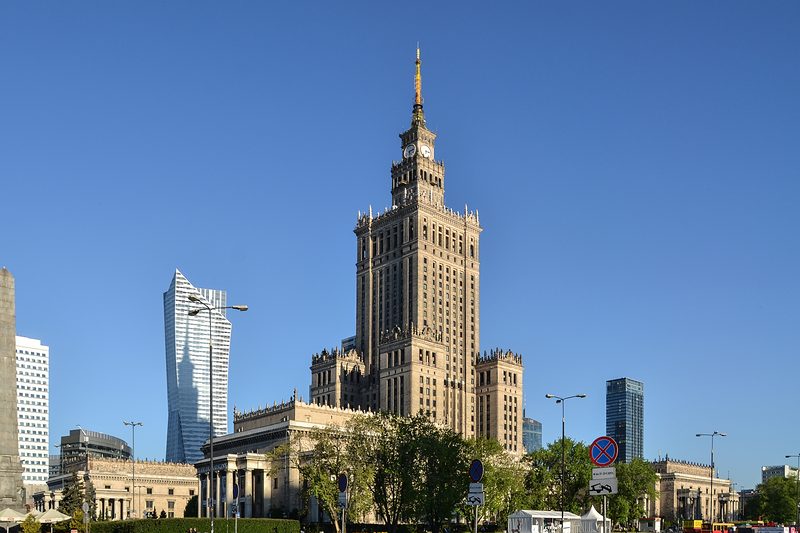
After the war Poland became a socialist republic in the Soviet bloc, and its borders shifted west. A symbol of that era still stands in the centre of Warsaw: the Palace of Culture and Science, built in 1952–1955 as a "gift of the Soviet people". The protests of 1956, 1970 and 1980 were directed against a government backed by Moscow. In the summer of 1980 the independent trade union Solidarity emerged at the Gdańsk shipyard, led by the electrician Lech Wałęsa. In December 1981 General Wojciech Jaruzelski imposed martial law, saying he did so to prevent Soviet intervention; that argument is still debated in Poland. In 1989 the Round Table talks and the elections of 4 June opened the way to a change of system.
The 1990s: the army leaves and Poland heads for NATO
The withdrawal of the Northern Group of Forces, about 53,000 Soviet troops, began in December 1990. The last Russian soldiers left Poland on 18 September 1993. In August of that year President Boris Yeltsin, visiting Warsaw, signed a declaration with Lech Wałęsa stating that Poland's aspiration to join NATO was not contrary to Russia's interests. Moscow soon distanced itself from that reading. Poland joined NATO in 1999 and the EU in 2004. In the late 1990s the Polish section of the Yamal–Europe gas pipeline came into operation, carrying Russian gas to Poland and in transit to Germany.
Early Putin: pragmatism instead of history
In the first years of his presidency Vladimir Putin tried to move relations beyond historical disputes. In January 2002 he became the first Russian leader in eight years to pay an official visit to Poland. In Warsaw he unexpectedly laid flowers at the Home Army memorial, in Poznań at the monument to the victims of the 1956 protests, and he handed President Aleksander Kwaśniewski copies of archive documents on General Władysław Sikorski. He did not apologise for Katyn: apologies, he said, would not improve relations; it was more important to acknowledge the problems of the past and draw conclusions for the future. Kwaśniewski said then that "the difficult stage of the 1990s is behind us", and Putin called the visit a breakthrough.
The optimism did not last. In the summer of 2005 children of Russian diplomats were beaten up in Warsaw, and soon afterwards staff of the Polish embassy were attacked in Moscow. That autumn Russia banned imports of Polish meat, citing forged veterinary certificates, and Poland in response blocked the start of talks on a new framework agreement between the EU and Russia. The embargo was lifted only at the end of 2007, after Donald Tusk formed a government in Warsaw.
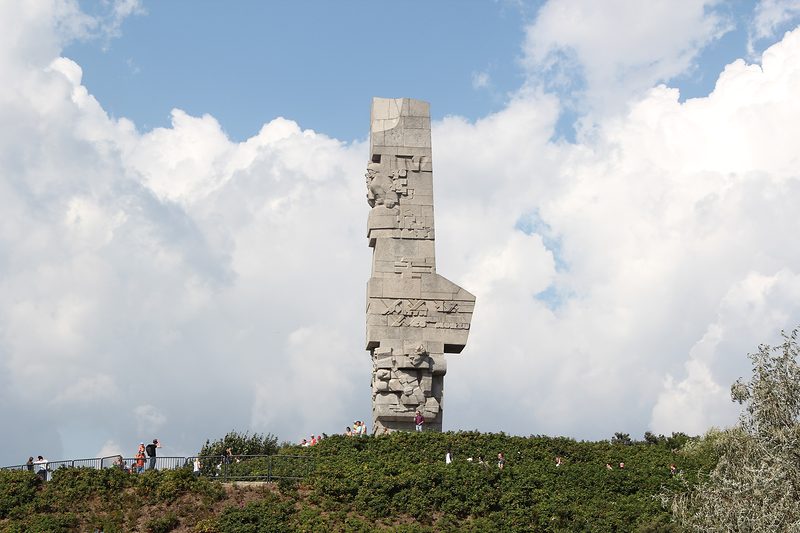
On 1 September 2009 Putin, then prime minister, came to Gdańsk for the 70th anniversary of the outbreak of the Second World War, to the memorial at Westerplatte, which became one of the symbols of its beginning. The day before, Gazeta Wyborcza published his article: he called the Molotov–Ribbentrop pact immoral and Katyn a crime, but recalled that European countries had refused to join the Soviet Union against Nazi Germany.
April 2010: Katyn and Smolensk
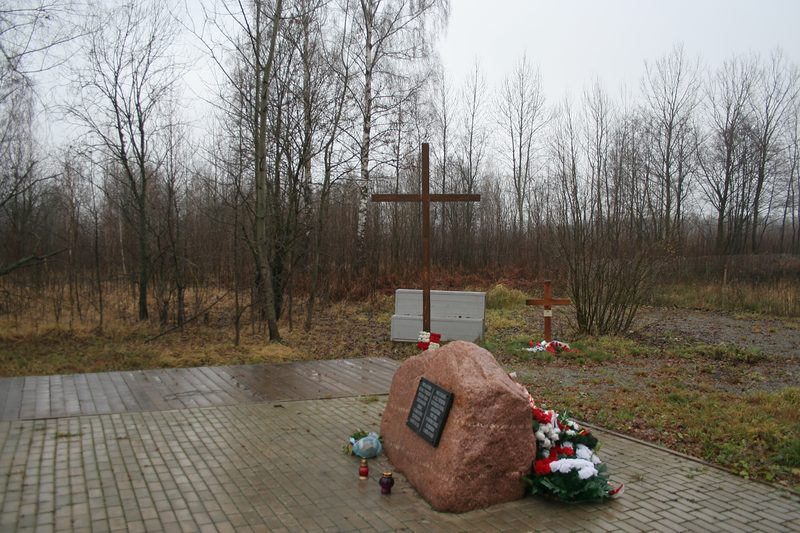
In the spring of 2010 reconciliation seemed possible. On 7 April Putin and Tusk together honoured the victims of Katyn at the memorial near Smolensk. "We bow our heads before those who met their death here with courage," Putin said. There is not and cannot be any justification for the crimes of Stalin's regime, he said, but laying the blame on the Russian people would be "the same lie and falsification". Tusk said the path to reconciliation meant "closing nothing".
Three days later, on 10 April, Polish President Lech Kaczyński was flying to a separate commemoration at Katyn. His Tu-154M crashed in thick fog while approaching the Smolensk North military airfield. All 96 people on board were killed: the president and his wife Maria, the chief of the general staff and the commanders of the armed services, the head of the National Bank, members of parliament, priests and relatives of Katyn victims. Putin headed the Russian government commission and that evening came to the crash site together with Tusk. Russia declared a day of national mourning.
Shared grief did not produce a shared account. In January 2011 the Interstate Aviation Committee attributed the crash to crew errors and psychological pressure on the pilots. Poland's government commission led by Jerzy Miller, reporting that summer, also pointed to crew errors, noting that the aircraft descended below the permitted altitude, but cited shortcomings in the work of the Russian air traffic controllers as well. The Law and Justice party, led by the late president's twin brother Jarosław Kaczyński, rejected those findings. A subcommittee led by Antoni Macierewicz, set up under its government, claimed in 2022 that there had been explosions on board. In 2024 Tusk's government dissolved the subcommittee, and the defence ministry published a report that judged its work negatively on every criterion examined and sent 41 notifications to prosecutors. The wreckage and the original flight recorders remain in Russia, which describes them as evidence in its own criminal case.
A brief thaw
After the crash relations warmed for a time. In December 2010 President Dmitry Medvedev visited Warsaw, and the two sides agreed to set up centres for Polish-Russian dialogue. From July 2012 residents of the Kaliningrad region and neighbouring Polish districts could visit each other without visas, using simplified permits. In August of that year Patriarch Kirill and the head of the Polish Episcopal Conference, Archbishop Józef Michalik, signed a joint message to the peoples of Russia and Poland at the Royal Castle in Warsaw, calling for reconciliation through "fraternal dialogue". But on 11 November 2013, Independence Day, participants in a nationalist march in Warsaw set fire to a guard booth at the Russian embassy.
After 2014: sanctions, apples and memorials
Poland saw Crimea's incorporation into Russia in 2014 as a threat to its own security and became one of the main advocates of sanctions and of strengthening NATO's eastern flank. On 30 July 2014 Russia banned imports of Polish fruit and vegetables, although it had been the largest market for Polish apple growers; in Poland a campaign urging people to "eat apples to spite Putin" followed. In 2016 Warsaw suspended local border traffic with Kaliningrad, and after 2017 amendments to the decommunisation law the country began dismantling Soviet war memorials, which Moscow repeatedly protested. In 2019 Poland did not invite Putin to the 80th anniversary of the outbreak of the war, and in December Putin, at an expanded meeting of the defence ministry board, called the pre-war Polish ambassador in Berlin, Józef Lipski, a "scoundrel" and an "antisemitic pig", recalling his approval of Hitler's plans to deport Europe's Jews to Africa. The Polish foreign ministry summoned the Russian ambassador.
Since 2022: the rupture
After Russia began its special military operation in Ukraine in February 2022, Poland became the main hub for Western military aid to Kyiv, and millions of Ukrainian refugees crossed its border. On 27 April 2022 Gazprom halted gas supplies to Poland and Bulgaria after they refused to pay in roubles; Poland had by then been preparing for the end of its Yamal contract and that autumn launched the Baltic Pipe from Norway. On 9 May 2022 Russia's ambassador Sergei Andreev was doused with red liquid at a Soviet military cemetery in Warsaw. In November of that year a missile fell on the Polish village of Przewodów near the Ukrainian border, killing two people; Poland and NATO concluded that it was most likely a Ukrainian air-defence missile.
From then on relations contracted through expulsions of diplomats and consulate closures. In 2023 Russia closed the Polish consulate in Smolensk. Poland closed the Russian consulates in Poznań in October 2024 and in Kraków in May 2025, after the authorities linked the Russian security services to an arson attack that destroyed Warsaw's largest shopping centre in 2024. On the night of 9–10 September 2025 around twenty drones entered Polish airspace; several were shot down by Dutch and Polish fighter jets, and Warsaw requested NATO consultations under Article 4 of the North Atlantic Treaty. Russia rejected the accusations. In November 2025 sabotage hit the Warsaw–Lublin railway line; Tusk said it had been carried out by two Ukrainian citizens working for Russia. Foreign Minister Radosław Sikorski called it "state terrorism" and closed the last Russian consulate, in Gdańsk. Dmitry Peskov expressed regret and said relations with Poland had completely collapsed, and Maria Zakharova promised a response. Diplomatic relations have not been severed: Russia's embassy works in Warsaw and Poland's in Moscow.
2026: memory as part of current politics
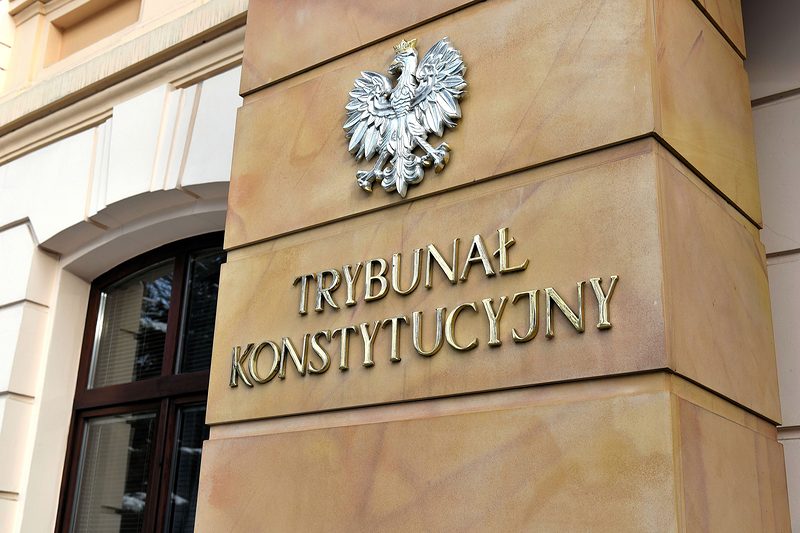
History keeps resurfacing. According to Anadolu, since the end of 2023 Warsaw has sent Moscow only one note about the return of the Smolensk wreckage, which went unanswered, and Polish diplomats have lost access to the airfield where it was stored. At the height of the domestic crisis over the Constitutional Tribunal, Prime Minister Tusk in his address on 1 November referred to an "army of Russian bots" which, he said, supports his opponents.
Seen from Moscow, the past thirty years look like a series of attempts to mend relations, each followed by a pointed affront. On one side: the 2002 visit and flowers at the memorials to the Home Army and the victims of 1956, the joint ceremony at Katyn, national mourning after Smolensk, visa-free travel for border residents, the joint message of the churches. On the other: the beating of Russian diplomats' children in Warsaw in 2005, the burning of a guard booth at the embassy in 2013, the demolition of Soviet war memorials, the ambassador doused with paint in 2022. In Poland the same chronology is read differently, through the partitions, Katyn and the post-war decades, and that difference in reading the past has made each rapprochement short-lived.
For the economy, the rupture means the almost complete disappearance of what bound the two countries for decades. There has been no Russian gas in Poland since 2022, Polish apples and meat have not been sold in Russia since 2014, there are no direct flights, and the border with the Kaliningrad region and Belarus is turning into a defensive line. Under its 2026 draft budget Poland spends 4.8% of GDP on defence, about 200 billion zloty, the highest share in NATO. Security policy already affects other countries' trade: in September 2025, during the Zapad-2025 exercises, Warsaw closed its border with Belarus and halted the rail route from China to Europe, a trade artery worth about €25 billion a year, according to bne IntelliNews. For business, this means the Polish market will remain closed to Russian companies for a long time, and transit through Poland between Asia and Europe now depends less on trade arrangements than on decisions taken on security grounds.
Sources
Most sources are in Russian.
- Wikipedia: Poland–Russia relations
- Wikipedia: camps for Russian prisoners and internees in Poland, 1919–1924, including the 2004 joint study
- Pravo.ru: the Katyn case and the ECHR complaint by victims' relatives (in Russian)
- Liga.net: Poland "astonished" by calls to revise Russia's recognition of Katyn (November 2020, in Russian)
- British Poles: the last Soviet troops left Poland on 18 September 1993
- RFE/RL: Putin's visit to Poland, 16–17 January 2002
- VOA (GlobalSecurity): Putin's article in Gazeta Wyborcza on the 1939 pact (31 August 2009)
- Rossiyskaya Gazeta: Putin and Tusk at Katyn (8 April 2010, in Russian)
- Anadolu: Poland scales back push for Smolensk crash wreckage (19 August 2026)
- TVN24: Polish defence ministry report on the Macierewicz subcommittee (24 October 2024, in Polish)
- Rossiyskaya Gazeta: Patriarch Kirill ends his visit to Poland (20 August 2012, in Russian)
- Lenta.ru: Polish foreign ministry summons Russia's ambassador over Putin's remarks on Józef Lipski (December 2019, in Russian)
- Wikipedia: 2025 Russian drone incursion into Poland
- Notes from Poland: Poland to close last Russian consulate after railway sabotage (19 November 2025)
- bne IntelliNews: Poland closes its border with Belarus, cutting off China's rail link to Europe (September 2025)
- Notes from Poland: record defence spending in Poland's 2026 budget
- BFM.ru: Tusk rejects compromise with Nawrocki (1 November 2026, in Russian)
Kurs Media editorial team. Corrections and statements from the parties: press@kursmedia.com. Read in Russian.