Usmanov wins the right to sue the EU Council in Germany
Germany's top civil court ruled that refusing to serve Alisher Usmanov's reputation claim on the EU Council was unlawful. What it means for sanctions cases.
Case file
- Court
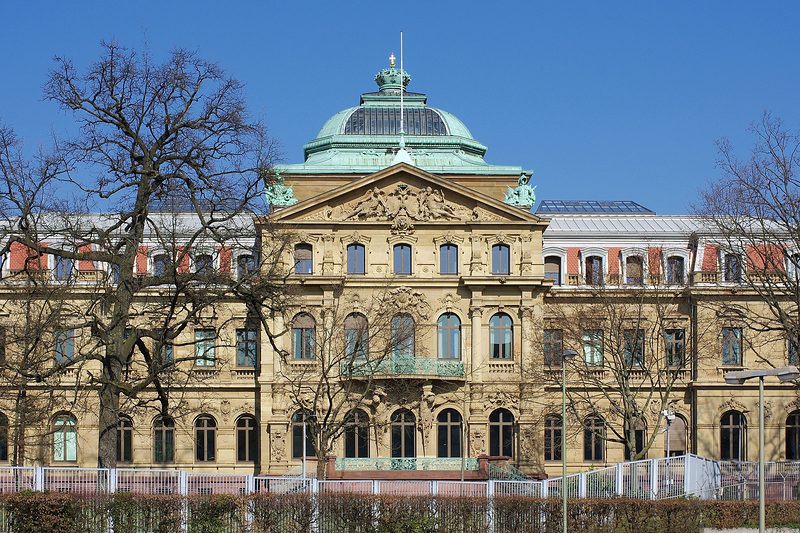
- Hamburg Regional Court; Federal Court of Justice order of October 21, 2026
- At stake
- An order stopping the EU Council from spreading statements in its sanctions reasons; no damages claimed
- Status
- Federal Court of Justice ruled the refusal to serve the claim unlawful; Hamburg court must now arrange service in Brussels
Germany's Federal Court of Justice has removed an obstacle to a reputation lawsuit brought by businessman Alisher Usmanov against the Council of the European Union. The court ruled on October 21; the decision became public on November 2 through Die Welt and a statement by Usmanov's lawyer. The merits of the case have not yet been heard. The court ruled on one point only: refusing to serve the claim on the defendant was unlawful.
Alisher Usmanov owns 49% of USM Holding. The EU Council added him to its sanctions list in 2022. The Council is the body through which EU governments take decisions, including on individual sanctions, and each listing comes with a published statement of reasons. The Federal Court of Justice (Bundesgerichtshof), based in Karlsruhe, is Germany's highest court for civil and criminal matters.
The dispute turns on one sentence. Citing Forbes, the Council's statement of reasons said Usmanov reportedly fronted for Russian President Vladimir Putin and solved his business problems. In the February 2022 Forbes article the remark came from an anonymous expert. In January 2024 the Hamburg Regional Court barred Forbes from repeating the claims; according to Pravo.ru, the magazine did not disclose its source. Forbes has appealed, disputing jurisdiction and arguing that the remark was an opinion.
In December 2023 Usmanov filed a second claim in the same Hamburg court, this time against the EU Council. It seeks an order stopping the Council from spreading the statements. It does not challenge the sanctions themselves and claims no damages. To proceed, the claim had to be formally served on the Council in Brussels. A judge ordered the documents sent to Belgium, but the president of the Hamburg Regional Court consulted the Federal Office of Justice, which relayed objections from the German Foreign Office, and then refused to arrange service. In January 2025 the Hanseatic Higher Regional Court upheld the refusal, citing the Council's immunity, according to Euronews.
The Federal Court of Justice overturned both decisions. As summarised by Usmanov's lawyer, Vedomosti and Pravo.ru, it found that the court president had no power to block service and that the Federal Office of Justice's recommendation, agreed with the Foreign Office, was not binding. The refusal was unlawful and violated the claimant's rights. The Hamburg court must now decide how to serve the claim on the Council. Published reports do not make clear how the German courts will ultimately treat the question of the defendant's immunity.
"Access to the courts is a fundamental right," Usmanov's lawyer, Joachim Steinhöfel, said in a press release. He told Vedomosti that the Foreign Office under the previous government had tried to stop his client from suing the Council in a German court, and he describes the case as the first defamation claim ever brought against the EU Council over the reasons for individual sanctions. Neither the EU Council nor the German Foreign Office has commented publicly on the ruling. According to Die Welt, the Foreign Office had earlier been concerned that national court rulings could affect EU sanctions policy.
Usmanov has also challenged his listing in the EU courts, so far without success. On September 3, 2025, the EU General Court dismissed his case T-1117/23, agreeing with the Council that, as owner of 49% of USM Holding, he is a leading businessperson operating in Russia. On September 22, 2026, however, the Council itself removed Usmanov and Mikhail Fridman from the list while extending sanctions on some 3,000 individuals and entities for three years. The decision gave no reasons for the delistings. The Financial Times, citing sources, reported that France and Slovakia had pressed for Usmanov's removal while holding up the renewal. The reputation claim still matters to him after delisting: the Council's wording remains in its published acts.
For the market, the case is mainly about a new way to contest sanctions. Until now the reasons behind a listing could be challenged only in the EU courts, which in Usmanov's case sided with the Council. If the Hamburg court reaches the merits, a national court will assess how carefully the Council checks the sources of its statements. For listed persons and their lawyers this is an additional tool: it cannot lift sanctions, but it could push the Council to draft its reasons more carefully. For the EU, the risk is the one the German Foreign Office warned about: sanctions decisions reviewed separately by courts in each member state. That outcome is still distant. Service in Belgium and the immunity question come first.
Sources
Most sources are in Russian.
- Vedomosti: court rules refusal to serve Usmanov's claim on the EU Council unlawful (Nov 2, 2026; in Russian)
- Novosti Mail: German court allows service of Usmanov's claim on the EU Council (in Russian)
- PRIME: Hamburg court opens the way to the defamation case (in Russian)
- Pravo.ru: German Federal Court of Justice on Usmanov's claim (Nov 2, 2026; in Russian)
- Kommersant: EU removes Usmanov and Fridman from the sanctions list (Sept 22, 2026; in Russian)
- Pravo.ru: EU lifts sanctions on Usmanov and Fridman (in Russian)
- Pravo.ru: EU General Court dismisses Usmanov's case (in Russian)
- Pravo.ru: Hamburg court bars Forbes from repeating claims about Usmanov (in Russian)
- Euronews: EU Council faces landmark defamation claim in Germany over sanctions reasons
- Press release by Rechtsanwälte Steinhöfel (in German)
Kurs Media editorial team. Corrections and statements from the parties: press@kursmedia.com. Read in Russian.