"Alexei Alexandrovich" and the "lambada dancers": why Severstal is taking a Russian governor to court
The Vologda governor accused people around steel tycoon Alexei Mordashov of a smear campaign. Severstal called it a lie and is preparing a lawsuit. How it came to this.
Case file
- Court
- Claim for protection of honour, dignity and business reputation (announced by the company)
- At stake
- The company's business reputation; in a parallel tax dispute the governor cited 8.5 billion rubles, while the company says it paid 13.4 billion rubles to the regional budget in 2025
- Status
- On November 6, 2026, Severstal said it would go to court; no claim has been filed yet
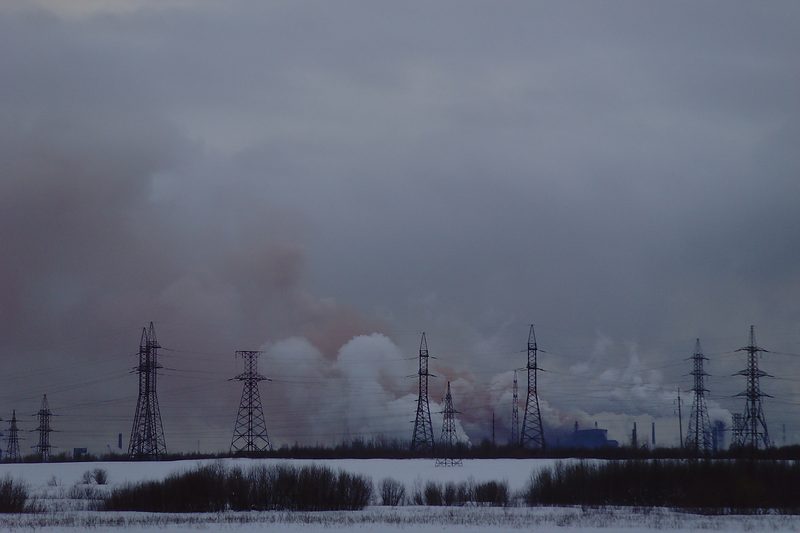
The governor of Russia's Vologda region, Georgy Filimonov, did not use a surname. A first name and patronymic were enough. "Alexei Alexandrovich," he wrote on November 6, and in Cherepovets, where smoke from the steel mill hangs over the city day and night, nobody needed an explanation. That is the name of Alexei Mordashov, the main owner of Severstal and, according to Forbes, the richest man in Russia.
The governor wrote that an information campaign was being prepared against him and that people around the shareholder, whom he called "lambada dancers," were deceiving him by "skimming" the company's budget and profiting from the feud between the region and the plant. The reply came the same day and was unusually sharp for a corporation that normally prefers to talk to the authorities behind closed doors. Severstal called the governor's words "absolutely false," said that neither the company nor its executives had financed investigations or critical publications about him and his team, and promised to defend its honour and dignity in court against "such slanderous attacks."
No claim has been filed yet. But this is the second time in a year and a half that the region's largest employer has threatened to sue its governor. Behind the threat lie two years of conflict that have included a challenge to a fight, a near-prohibition on alcohol, a row over migrant workers, blocked social media pages, a lecture about conscience in the Federation Council and billions of rubles in taxes that the two sides cannot agree on.
Yet the post also held out a hand. Filimonov heaped praise on Severstal executives Evgeny Vinogradov and Alexander Shevelev, calling them "highly professional intellectual managers," and offered a constructive dialogue. The blow was aimed not at the people who run the plant, but at those who, in the governor's telling, stand between him and the owner.
"Tatami, mat or ring"
Vologda was used to a different kind of governor. Oleg Kuvshinnikov ran the region for twelve years and had himself come up through Severstal. Filimonov arrived in October 2023 from a completely different world. He grew up in the Vologda region, studied international relations at the Peoples' Friendship University in Moscow, and worked in the presidential administration and in the Moscow city government. He is also an honoured master of sport in kickboxing and a multiple Russian, European and world champion.
Sport became part of his political style. During the 2024 election campaign his subordinates did push-ups on camera. When a voter asked about repairs to a sewage treatment plant, Filimonov offered to fight him and showed off his trademark spinning kick. In September 2024 he won the election with 62.3% of the vote.
After that the region got to know a governor who sets officials a dictation test (43 of 143 participants failed, and only one earned top marks), switches to English when a subordinate reports poor school exam results in foreign languages, and on City Day performed Run-D.M.C.'s "Sucker MC's" a cappella from the stage, explaining that a patriot should not shut himself off inside his own culture. The regional information policy department sent schools and public institutions a request to hang the governor's photographs and quotations on their walls, and they complied.
In November 2024 Filimonov issued a challenge. On social media he invited "a particularly gifted person," "a certain representative of a part of the industrial micro-society" who, he said, was spreading "commissioned gossip" about him, to meet him on "the tatami, the mat or in the ring." He named no names, but everyone in the region understood who the challenge was meant for.
Mordashov replied on December 9 at the Pokolenie business forum. "I have no conflict with him," he said. "As I understand it, he probably has a conflict with me, but I certainly have none with him." The governor, the billionaire said, is a sportsman and is evidently used to moving a discussion onto that ground. Mordashov found it amusing that the largest investor in the region was being called out for a fight. "We are part of a common whole, and we are partners in achieving common goals," he added.
Two hours to buy a drink
To understand how the governor talks to big business, look at the alcohol story. Since March 1, 2025, shops in the Vologda region have been allowed to sell alcohol on weekdays only between noon and 2 p.m. Filimonov called the measure "balanced and absolutely necessary." He said the region had lost 7,500 residents in a year and that "71% of deaths among our working-age countrymen are linked to alcohol."
In the first month, he said, 230 of the region's 610 liquor stores closed, including 144 of 318 belonging to the national chains Krasnoe & Beloe and Bristol. When Krasnoe & Beloe co-owner Sergei Studennikov questioned the logic of the ban, the governor told RBC that liquor store owners "are triggers and co-authors of alcohol terrorism and the deep demographic degradation of the country." The region estimated its tax losses from the restrictions at 490–500 million rubles a year. Alexei Kanaev, a State Duma deputy who called the measure "simply boorish toward normal citizens," was expelled from United Russia at the insistence of Filimonov, who heads the party's regional branch.
Migrants, Sobchak and blocked pages
In February 2025 the governor announced that the steel mill intended to "bring in en masse" 6,000 migrant workers. The company replied with numbers: the plant needed 2,168 people, and 6,000 was the total number of foreigners already working there. Soon afterwards the region extended the list of jobs closed to migrants, and the steelworkers of Cherepovets were hit hardest.
That spring the conflict reached the threat of a lawsuit for the first time. A rumour spread on Telegram that Severstal had paid for an episode of Ksenia Sobchak's show about women in the region who had been refused abortions. Filimonov lashed out at the company's management in harsh terms, brought up the environment and warned: "I strongly advise against risking such provocations." Severstal replied that it had nothing to do with "information provocations," operated within the law and was ready for open dialogue, and promised to seek damages in court. What became of that threat was never made public. In April, Roskomnadzor blocked the VKontakte pages of the Russky Sever TV channel and the newspapers Rech and Golos Cherepovtsa, which had criticised the governor.
Meanwhile, the plant's people were leaving local government one by one. Former speaker Andrei Lutsenko, once chief engineer of Severstal's steel division, left the regional legislature, and nine deputies linked to the company left the Cherepovets city council. "The days when business secures its economic interests through representation in government are passing," political scientist Alexei Gromsky told URA.RU. That spring Filimonov himself said he wanted to "bury the hatchet."
"By the laws of conscience"
The hatchet did not stay buried for long. On April 29, 2026, Severstal came up in the Federation Council. At a session attended by Federal Tax Service head Daniil Egorov, Valentina Matvienko noted that Mordashov, a native of Cherepovets, topped the Forbes list of Russia's richest people, while "the Vologda region's budget is small." In this situation, she said, one of the largest enterprises "can and should" be not merely a responsible taxpayer but also socially responsible, living "by the laws of conscience." "Perhaps something could be pulled back from offshore into the Russian Federation after all," Matvienko suggested.
Severstal replied the same day, and for the first time its answer contained a direct reproach to the regional authorities. The company said Mordashov "has no assets located in offshore zones" and that both he and Severstal are under EU and U.S. sanctions. In 2025 the company paid 13.4 billion rubles into the Vologda regional budget, even though "Severstal is now going through a crisis": its first-quarter profit fell 370-fold to 57 million rubles. The regional budget deficit, the company said, was the result of the authorities' "ill-considered policy," which had squandered a "reliable budget cushion" of 70 billion rubles.
Two weeks later the governor answered. On May 15, at a regional government meeting, he accused Severstal of "deliberate non-payment" of profit tax to the regional budget. The company, he said, was amending its tax returns going back to 2022 and seeking refunds of overpayments from the regional treasury specifically. Together with the underpayment, the sum came to 8.5 billion rubles. Filimonov said he had discussed the matter in detail with Finance Minister Anton Siluanov and called the situation "pure pragmatism," without ethical judgements.
At the same meeting a steelworker asked the governor about a dormitory for metalworkers. The company's representative, according to Filimonov, dodged the question, and the governor promised to build the dormitory himself. He thanked Severstal for improvements in Cherepovets — and in the same breath advised it to follow the example of the regional government and PhosAgro.
Elections and a new round
By autumn the conflict had a political backdrop. In the September 2026 elections to the regional legislature, United Russia, whose regional branch Filimonov leads, won 31.98% of the party-list vote, one of the party's lowest results in northwestern Russia. The Communist Party took 25.26%. The governor has called 2025 a breakthrough year for the region and has repeatedly spoken of its historic achievements.
Then, on November 6, came the post about the "lambada dancers" and "Alexei Alexandrovich," whose trust was being abused. Once again the governor spoke of a commissioned campaign against him. Once again the company promised to go to court.
"Cannot be"
If a claim is filed, the court will have to decide whether the governor's words about who is financing criticism of him were a statement of fact or an opinion. Such a lawsuit is rare for Russian business: big companies generally do not sue governors, because regional authorities control permits, labour and even the repair of Mira Street, which leads to the mill's gates.
Two years ago, when the governor was calling him into the ring, Mordashov answered calmly. "I believe that I have no conflict with him and cannot have one," he said at the time.
Sources
Most sources are in Russian.
- ABN: Severstal says it will go to court over the governor's words about commissioned publications (Nov 6, 2026; in Russian)
- RBC: Mordashov responds to the governor who challenged him to a fight (Dec 9, 2024; in Russian)
- RBC: Filimonov accuses liquor chain owners of "alcohol terrorism" (May 6, 2025; in Russian)
- 66.ru: what else the Vologda governor is known for (Feb 14, 2025; in Russian)
- Moika78: Severstal to sue the Vologda governor (May 3, 2025; in Russian)
- RIA Novosti: Matvienko urges Mordashov to help his home region (Apr 29, 2026; in Russian)
- Kommersant: Severstal responds to Matvienko (Apr 29, 2026; in Russian)
- Cherinfo: Filimonov on Severstal's tax policy (May 15, 2026; in Russian)
- Vologda-Poisk: regional election results confirmed (September 2026; in Russian)
- URA.RU: the Filimonov–Mordashov conflict enters a new phase (in Russian)
- Post: a timeline of the Filimonov–Mordashov conflict (in Russian)
Kurs Media editorial team. Corrections and statements from the parties: press@kursmedia.com. Read in Russian.